Wine and Cheese Pairing Guide: Best Combinations for Every Occasion
Pairing wine and cheese is a love-hate relationship as you can do it right or completely mess it up. The best wine can be destroyed when picking the wrong cheese, and a mediocre wine might be enhanced by choosing the right accompaniment. Understanding the principles behind successful pairings and the historical context of these products can guide you in making the right choices.
Why Wine and Cheese Go Well Together
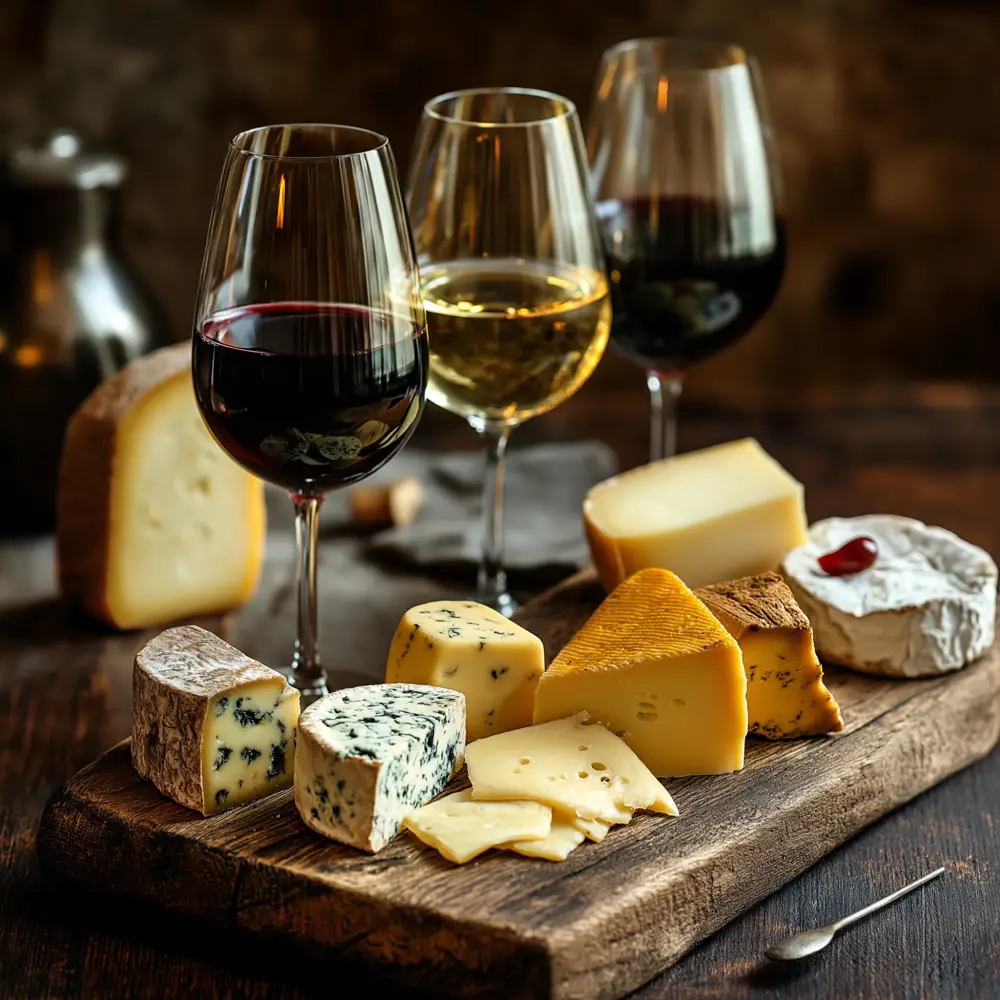
The interplay between wine and cheese originates from their complementary flavor profiles and textures. Let's have a glance at cheese first: Cheese is naturally rich in fats and proteins, which coat the mouth. Wine, in contrast, delivers acidity and tannins that cut through this richness, hence, cleansing, if you would say so, the palate. This combination of two opposites enhances the tasting experience, allowing both the wine and the cheese to shine.
The Importance of Matching Weight and Intensity
The ground rule when it comes to pairing wine with cheese is understanding the weight and intensity of both wine and cheese. They have to match together. Light-bodied wines work best with lighter cheeses, while more heavy, structured wines complement stronger, aged cheeses.
A fresh goat cheese, for instance, with its delicate flavor profile, pairs amazingly with a zesty Sauvignon Blanc. The floral aroma combined with the sharp acidity are in perfect harmony with the more gentle round and creamy profile of the goat cheese. In contrast to that, a mature cheddar with its bold and complex taste matches well with a rather full-bodied Cabernet Franc or a Rioja red wine, for example.
The History of Protected Cheese Origins
The concept of protecting the origin of food products has deep roots. It was in 1925 when Roquefort became the first cheese to receive Appellation d'Origine Contrôlée (AOC) status in France. This designation ensures that only cheeses produced in a specific manner within the designated region can bear the name Roquefort. Such protections preserve traditional methods and maintain the quality and authenticity of regional products.
4 Must-Try Wine and Cheese Pairings
Sometimes, it is worth experimenting with some unconventional pairings, some pairings which your first thought might be: Does this work? It will bring you to the next level and can lead to delightful surprises. We have collected a few ideas for unique combinations for you, You should try them out:
Parmigiano Reggiano and Lambrusco
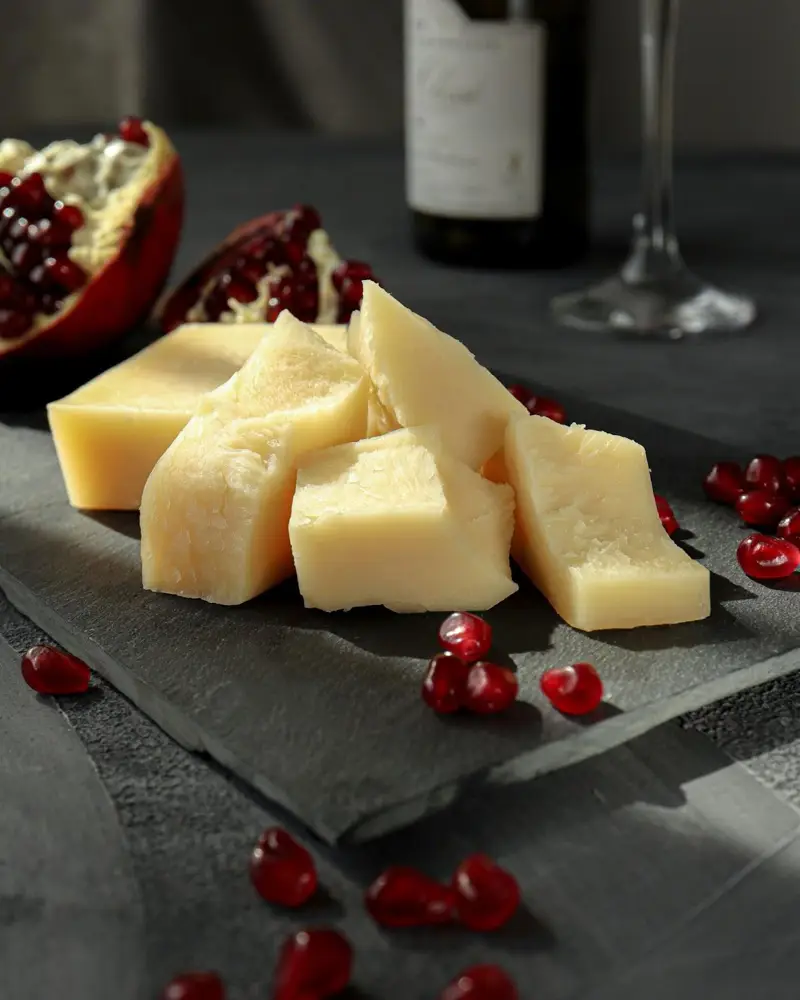
Parmigiano Reggiano is known as a hard, nutty cheese from Italy and is famous globally. Try it with a Lambrusco, which is a delicious sparkling red wine from Emilia-Romagna, Italy. The effervescence, together with those fruity notes, is a perfect match with the cheese's savory depth.
Drunken Goat Cheese and Tempranillo
Drunken Goat is a rather semi-firm Spanish cheese that has been soaked in red wine. Tempranillo, as one of Spain's leading grape varieties, would be the first choice here as the delicious berry flavors, together with the ripe mild tannins, go well with the cheese's creamy texture and the touch of wine-infused notes.
Gruyère and Riesling
Gruyère is on the more nutty and sweeter side, hence, it would be a perfect match with an off-dry Riesling. The acidity and hint of sweetness counterbalance the richness of the cheese.
Stilton and Port
This one is a classic. The tangy blue veins of Stilton cause a sensory explosion with the rich, sweet notes of Port wine. The saltiness and spice of the cheese, plus the sweetness and body of the wine, create a harmonious blend of flavors.
The Importance of Terroir in Pairing Wine and Cheese
The combination of soil, climate, and geography, known as terroir, is crucial when we choose the wine to pair with food. Most often, if you pick a wine from a certain wine region, you most probably won't go wrong if you have a glance at what kind of cheese has a similar origin.
Pairing products from the same region often leads to harmony that comes naturally. A Sancerre wine from France's Loire Valley, for instance, pairs well with the region's goat cheeses, such as the Crottin de Chavignol.
Tips for the Best Wine and Cheese Pairing
To enhance your wine and cheese pairing, consider the following guidelines:
Start with the Cheese First
Begin by picking the cheese first, and only after that choose the wine that complements its characteristics. This approach allows the cheese's flavors to guide your wine choice.
Consider the Accompaniments
What you could also do is to further pick a few elements like fruits, nuts, and bread to add more complexity to your pairing. An example could be a Brie with a piece of candied ginger and a sip of Chenin Blanc of Tokaj Aszú.
Trust Your Palate
Personal preferences play a significant role in pairing. Don't hesitate to try new combinations to discover what pleases your taste buds.
Wine and cheese pairing is an incredible experience offering a sensory climax. If you have a profound knowledge of the principles of matching weight and intensity, appreciating the significance of protected origins, and embracing the concept of terroir, you can create harmonious pairings.
So what are you waiting for? Go check it out.
Cheers!
Lotte Gabrovits