Sugar Rush: Unlocking the Rich World of Sweet Wines
The world of wine is rich and complex. Brut-style bubbles, waxy whites, refreshing rosés, or robust reds, but where do sweet wines feature? Often relegated to the bottom shelf in wine merchants, or left to collect dust in cellars until the festive period comes around.
With a focus on low calories, our increasingly health-conscious society means that appreciation for sweet wines is at an all-time low. Whilst sweet styles may not be the flavor of the month with wine consumers, they consistently offer some of the most complex and long-lived wines thanks to their sheer intensity, and kaleidoscope of flavors.
“Fashion fades, style is eternal”- Yves Saint Laurent
Different Styles of Sweet Wines
Looking just for a nice sweet wine, or the best sweet wine for desserts? Let us guide you on your journey by exploring the types, flavor profiles, food pairings, and tips to maximize your enjoyment of them.
Sweet wine contains a higher level of residual sugar compared to dry wines producing wines with marked sweetness. Residual sweetness is measured in grams per liter and is the sugar that remains in the wine after it is bottled. This may be acquired through halting the fermentation to preserve sweetness in the wine, or via an addition of sugar or unfermented grape juice. Depending on how much sugar remains, wines are categorized as dry, off-dry, medium-dry, medium-sweet, or sweet.
Sweet wines can be made from both white and red varieties. To achieve higher sugar levels, the sugar in the grapes is often concentrated, which means the resulting wines tend to be intensely flavored and rich, with a viscous mouthfeel. As with all wines, balance is essential, so firm acidity is often a key feature of sweet wines to ensure they are not overly cloying or sickly.
Noble Rot
Noble rot, or botrytis cinerea, is a desirable fungus that infects grapes. It concentrates the sugars and acidity in the berries, whilst contributing hints of ginger spice, rye bread, and saffron.
To develop this fungus, very specific conditions are required. Damp, humid mornings are critical to develop the fungus, whilst the afternoon must be dry and sunny to prevent the rot from creating off-flavors. On the surface, this may seem a little unappealing, but this method of sweet wine production has existed for centuries and is essential in producing the esteemed wines of Sauternes, and Tokaj.
- FUN FACT- Tokaji Eszencia is a rare style of sweet wine produced in the North of Hungary; legally it requires a sugar rush inducing 450 grams of residual sugar per liter!
Desiccated Delight
Dried grape wines involve dehydrating the berries to concentrate the natural sugars. This can be achieved through the “appassimento” method famously used in the wines of Valpolicella and Soave, where the sweet Recioto wines are produced. This method involves picking and drying the bunches by leaving them to raisinate on mats in chambers known as “fruttaio”, or on straw mats as is common in Spain's Andalusia region.
- FUN FACT- The Italian term “appassimento” translates as “withering” on account of the drying of the berries.
Take Your Sweet Time
Late-harvest wines are effectively a subcategory of dried-grape wines. Harvesting later allows the berries to desiccate on the vine and achieve higher sugar levels. This is not without risk, as rain late in the season can lead to rotten berries and off-flavors. Late-harvest wines may be labeled as Vendange Tardives in French or Vendemmia Tardiva in Italian.

Ice Ice Baby
Ever heard of ice wine, or know how it's made? You guessed it! Rather than relying on fungi or drying to concentrate the sugars in the berries, in the case of ice wine, the sugar in the grapes is concentrated using freezing. Canada is the world's largest producer, with Germany and China also known for producing this style.
Temperatures are typically allowed to drop to -8C for around 8 hours to ensure the berries are fully frozen. Once these temperatures are achieved, pickers are sent out, if needed in the middle of the night with head torches, to select the berries before being quickly pressed to extract the syrupy sweet juice.
- FUN FACT- Spain also produces ice wine, known locally as Vino de Hielo, in the region of Catalonia. Given the region’s warm Mediterranean climate, producers rely on a method of artificial freezing, also known as cryoextraction.
Rich and Warming
Fortified wines are made through the addition of grape spirit. Whilst not all fortified wines are sweet, Port, Madeira, and Sherry can be made in a sweet style.
Sweet Port, Madeira, and Pedro Ximenez Sherry are examples that are fortified before the fermentation is completed. The addition of alcohol denatures the yeast and halts the fermentation to retain sweetness. Conversely, Cream Sherry is fermented to dryness before adding back Pedro Ximenez, or cooked down grape must in inferior examples, to add sweetness.
Fortified wines range drastically in terms of style, but share the common feature of high alcohol, so ideal for those seeking intense, full-throttle wines.
- FUN FACT- Fortified wines like Madeira are some of the most long-lived wines in the world with the finest examples drinking well for over 200 years.
Too Sweet or Not Too Sweet?
That is the question… at least when pairing with food.
Here are a few basic rules to guide you when selecting sweet wines:
1. Sweet food with sweet wine- Your palate adapts to sweetness, meaning that when you are enjoying a sweet dessert, drinking a sweet wine will not seem sweet by comparison. Pairing a dessert with a dry style of wine can make it appear comparatively thin and austere.
2. Serve well chilled- With a few exceptions, sweet wines are best enjoyed around 6-8℃ (42-46℉) to subdue the sweetness and prevent them from appearing cloying. Whilst overchilling wines risks muting the flavors, the sheer intensity typically found in sweet wines means this is rarely a problem.
3. Context is everything- Sweet wines often get a bad rap because they are served with the wrong food, or even worse on their own! Try matching with powerfully flavored dishes that have the intensity to stand up to these wines.
4. Experiment- Don't take the previous advice too seriously, there are never any hard and fast rules with food and wine pairing. Be creative, explore, and savor the experience!
Sweet Suggestions
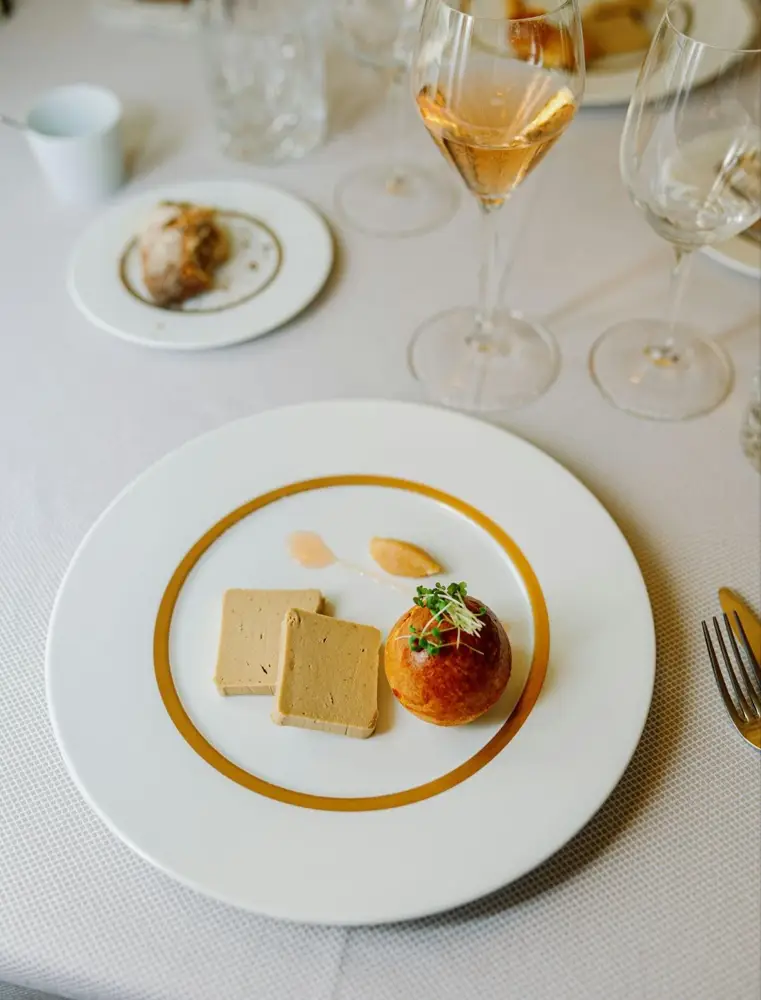
Foie gras & Vendange Tardive Pinot Gris
Whilst Sauternes is a classic regional pairing in Bordeaux, the sheer intensity can easily overpower the nuances of Foie Gras, instead why not an Alsatian pairing with a late-harvest Pinot Gris that has the weight and honeyed richness to match the creamy texture of the Foie Gras without being overbearing.
Blue Cheese & Sauternes or Tokaj
This tried and tested classic work of the interplay between the saltiness of the cheese and the sweetness of the wine. The tanginess and pungency of the blue cheese match perfectly with the intensity of the wine.
Pecan Pie & Cream Sherry
The rich nutty flavors and buttery texture of a Cream Sherry pair wonderfully with this Thanksgiving's Day classic; so much so that you may be tempted to adopt this as a festive tradition.
Fruit-based desserts & Ice Wine
The crystalline purity of ice wines lends itself perfectly to fresh fruit-based desserts. A Canadian Cabernet Franc redolent of strawberries and raspberries can make a sublime pairing with a strawberry cheesecake.
Ice cream & Pedro Ximenez/Rutherglen Muscat
These syrupy sweet wines can be overwhelming for those with even the sweetest tooth. If all else fails, why not just pour it over ice cream for a complex, boozy alternative to a caramel sundae?
- FUN FACT- Coca-Cola Original contains 106 grams of sugar per liter, a similar level to most Port wines.
Sanya Abhay