Wine Jargon Explained: Appellation
If you've ever picked up a bottle of wine, you may have stumbled upon the term "appellation" on the label, a word that seems to exist only in the world of wine. But in this context, it's an essential concept. Today, we're breaking down the meaning of appellation and why it matters.
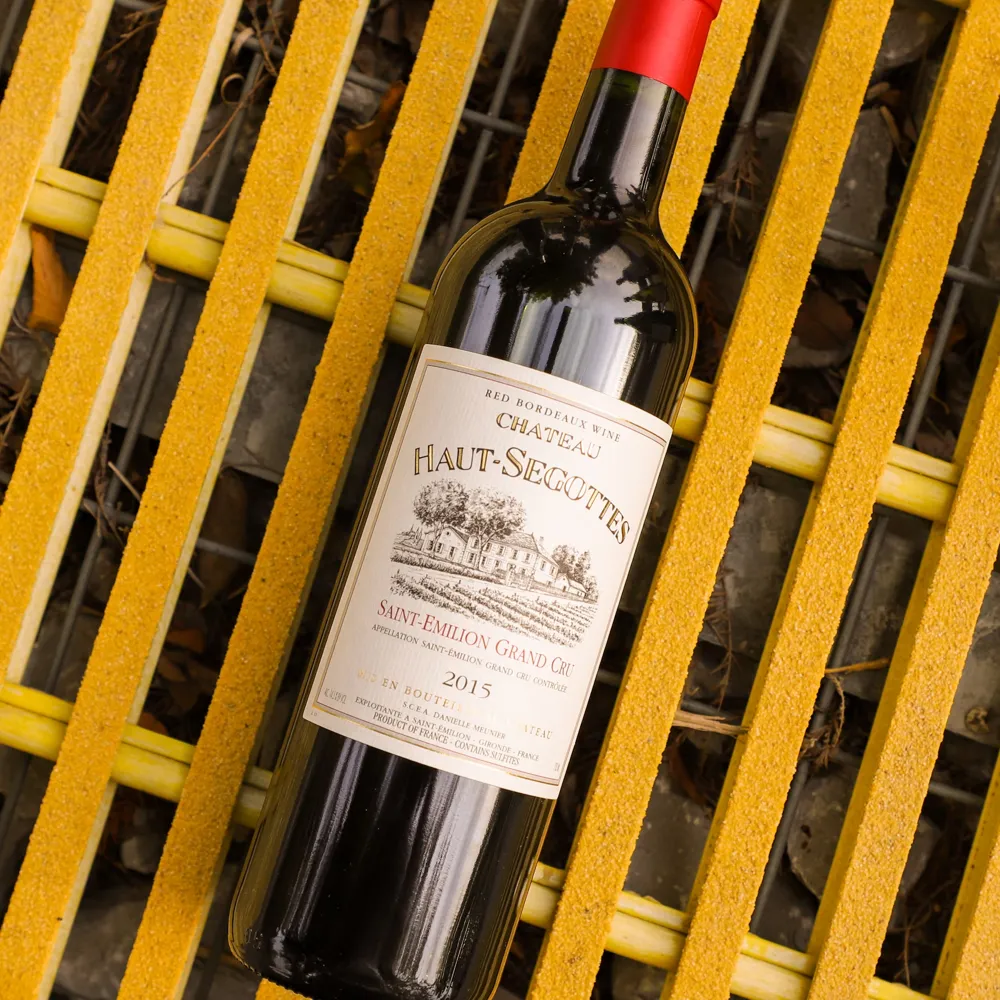
A bottle of Bordeaux wine with “Appellation Saint-Emilion Grand Cru Controlee” on the label (Photo: Allan Francis, Unsplash.com)
What is an Appellation?
An appellation, often abbreviated as “AOP” (Appellation d'Origine Protégée) or “AOC” (Appellation d'Origine Contrôlée), is a legally protected designation used primarily in the European Union. It defines the specific terroir, origin, and winemaking traditions of a wine. Officially, it's described as "a European certification that protects the designation of certain agricultural products made within a defined geographical area, according to specific traditional practices.”
In simpler terms, for a wine to be labeled as AOP, it must not only come from a particular geographic area but also adhere to traditional production methods. In the context of wine, this means the grapes must be of permitted varieties, the yield is regulated, and the vinification process follows specific rules—such as the use of oak and the duration of aging. In essence, an appellation serves as a safeguard for the quality and authenticity of a product.
The History and Evolution of Appellations
The appellation system originated in France and was later adopted by other European countries, eventually influencing the creation of similar systems in New World countries, like the United States, where the American Viticultural Area (AVA) was established. The first recognized AOP was the prestigious Châteauneuf-du-Pape.
Since the 14th century, Châteauneuf-du-Pape has been renowned as a premium wine region, earning the title "the wine of the Pope." By the 18th century, it was on the dinner table in the palace of the Pope in Avignon, catering foreign ambassadors and European aristocrats. Its status and popularity led to the demand in the market.
Châteauneuf-du-Pape was exported to England, Italy, and Germany. However, success brought challenges. By the early 20th century, the region faced rampant wine fraud. To combat this, the first Appellation Contrôlée rules were established in 1923, laying the foundation for the modern AOC system. In 1936, Châteauneuf-du-Pape became the first officially recognized AOC wine in the world.
The AOC system quickly spread throughout France and neighboring countries like Italy and Spain. Its primary purpose has always been to ensure the quality and authenticity of wines.
Appellation vs. Region
While an appellation often shares its name with a geographic region, such as Médoc in Bordeaux, it encompasses much more. An appellation defines not only where a wine comes from but also how it is made, which ultimately shapes the style of wine.
In Italy, some appellations are named after the wine or grape variety, combined with the place name. For example, "Brunello di Montalcino" refers to wine made from the Brunello, a clone of Sangiovese grapes, produced in the Montalcino region. Therefore, while appellations often overlap with regions, they are not identical.
In addition to the AOP system, the European Union also has a Geographical Indication (GI) system, which regulates the origin of agricultural products. GI has more relaxed rules regarding production methods and often covers broader geographic areas.
Appellation and Wine Quality
For a long time, appellations were seen as a gold standard for quality. The system was designed to protect the integrity and authenticity of wines. For many consumers, an appellation like Brunello di Montalcino or Barolo on a wine label signals a certain level of quality and consistency. You can expect a specific style and quality regardless of the producer.
However, the reality isn't always so straightforward. Within some appellations, the quality can vary significantly. Mass-produced wines and artisanal, meticulously crafted bottles can share the same AOP label, leaving consumers unsure about what they're getting.
Moreover, while appellations were originally intended to highlight terroir, some argue that the system has become overly standardized. This is particularly true in regions with less historical prestige. Wines labeled as “Vin de France” or those under the IGP (Indication Géographique Protégée) category, once considered lower quality, have seen a resurgence as winemakers seek more creative freedom outside the strict AOP regulations.
As a result, appellations are no longer always synonymous with premium quality or authentic, terroir-driven wines. While they still offer valuable guidance, especially for those new to wine, savvy consumers may want to look beyond the label to truly understand the quality and character of the wine they are purchasing.
Sylvia Ba