Unexpected Flavor in Altitudes
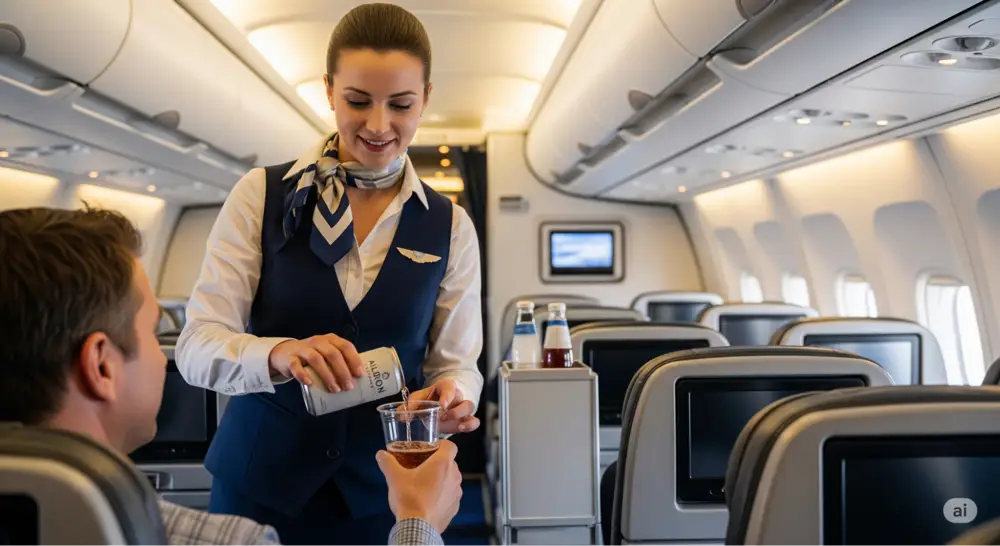
Finally, the holiday season is here. You've boarded your airplane of your favorite airline and are ready to start your vacation. After a short nap, the trolley appears—offering soft drinks, coffee, and wine.
The wine you'll get depends heavily on the airline and your seat class. On United Airlines' domestic economy flights, you might be handed a can of wine. On long-haul routes, the selection is usually broader. Step into Emirates Business Class, and you can expect an impressive curated list.
Yet, a wine that shines on the ground can taste entirely different at 40,000 feet. Some airlines even select wines specifically because they show better in the air. The cabin humidity is extremely low, usually just reaching 10–20%. This dryness dehydrates your nasal passages and palate, reducing your ability to smell and taste.
At altitude, the mix of lower pressure, low humidity, and cooler cabin temperature changes how we perceive flavor. Fruit notes fade, tannins feel rougher, and acidity jumps out more sharply. Wines can seem more astringent, less aromatic, and “drier” overall. The subtle layers you'd enjoy on the ground often vanish.
Low pressure also mutes volatile aromas, so the wine smells less expressive. In a can—where you wouldn't normally swirl and sniff—this matters less. Sweetness perception also drops, since your dried-out nasal passages and oxygen-deprived taste buds don't pick up sugar as well. Without sugar to carry flavor, the wine can taste flatter.
This is also a fun experiment. On your next flight, take a few notes on the wine you're served. Then, once you're back on the ground, open the same wine, ideally in the same type of glass, and compare. You might find the high-altitude version wasn't better or worse, just… different.