Is Manual Harvest Really Better than Machine Harvest?
It's harvest season in the Northern Hemisphere, so let's dive into the topic of grape harvesting. Manual harvest is often seen as a tradition and a marker of higher-quality wine. However, VinoVoss Wine Expert Evmorfia Kostaki, winemaker and co-founder of Kostaki Winery in Samos, Greece, is here to reveal the realities of both manual and machine harvesting—insights that may surprise you.
Imagine this: the sun is setting behind the rolling hills of Tuscany. The outlines of cypress trees surrounding the hilltop farmhouses make the landscape one of a kind. You grab your handwoven basket and head towards the vineyard. The red Sangiovese grapes are ready for picking. Walking down one row, you stop and collect the juiciest bunches. Once the basket is full, it's time to head to the winery and press the precious grapes. You put the grapes in a basin and start stomping them. The stalks tickle your feet and the red skins leave stains immediately, but that's all ok. In a few moments, you can be rewarded with a glass of chilled Chianti and the pizza your partner is baking in the wood oven. What a perfect harvest day…
The Reality of Harvest
Let's face it: wine is 50% tradition and 50% romance. One thing that brings the two worlds together is manual harvest. However, harvest is the hardest time of year for anyone in the wine production sector. It's incredibly time-sensitive work, and it's the moment the vineyard and winery team have to work seamlessly together, organizing the day-to-day work to the tiniest detail.
Manual Harvest Facts
Handpicking grapes is the oldest form of harvest. It requires no fancy machines, just a lot of manpower. The main advantage is that it has no limits. Harvesting steep slopes, bush vines (or any vineyard, really) is only possible by manual harvest. In addition, the workers have the opportunity to select which grapes they pick. This can be critical for some wine styles, like Sauternes, where only the grapes with botrytis must be picked.
Château Doisy-Védrines Château Petit Védrines Sauternes 2017
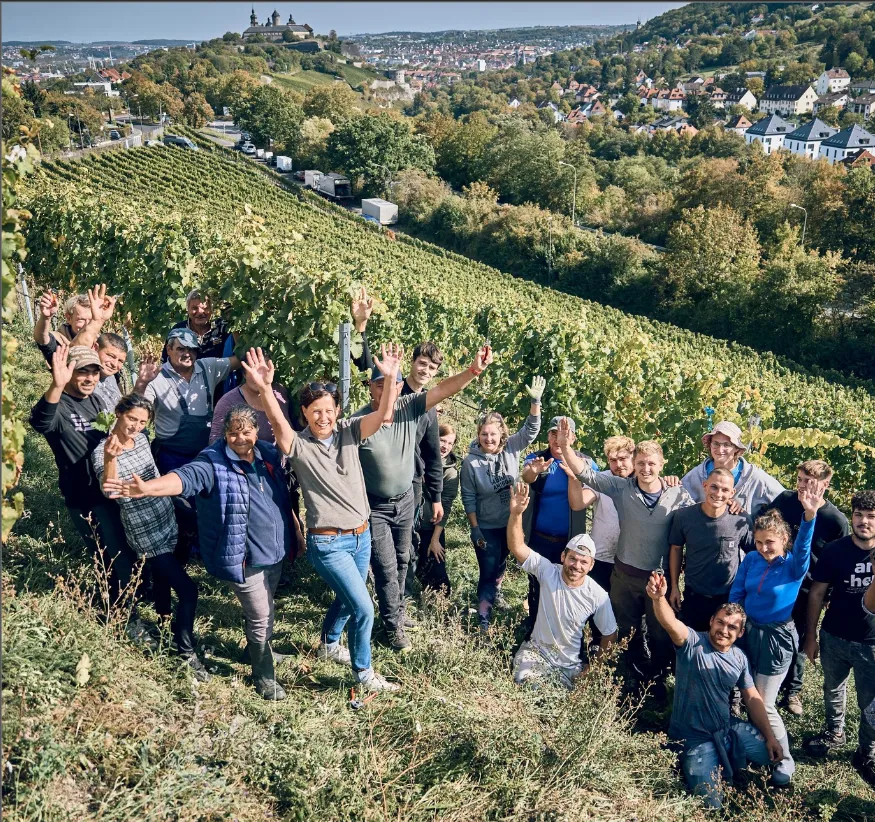
However, in most cases, the priority of the harvest team is to complete the job as fast as possible, as it's very time-consuming, and grapes have to be picked in optical ripeness for each style. Therefore, in reality, the quality selection made in the vineyard is very limited. Add night harvest to the equation, and the argument of sorting the grapes in the vineyard is completely busted. That's why many wineries sort the grapes at the winery, even when they do hand harvest.

Machine Harvest Facts
It's not possible to harvest all kinds of vineyards or wine styles with machines, and that's one of the main issues with machine harvesting. Vineyards must be planted in rows and the shoots must be trained on wire. In addition, the vineyard plot has to be sizable to cover the cost of the machine. Plus the terrain has to be relatively flat. Aside from vineyard restrictions, there are also wine style requirements. A machine harvester detached the berries from the vines and loads them in a truck to be transported to the winery.
Joel Gott Sauvignon Blanc 2022
Depending on the distance from the vineyard to winery, there can be some significant extraction time for these berries, which can make some wine styles impossible. For example, harvesting red grapes for a pale rose wine is almost impossible by machine, since the aim is to get as little contact of must with skins as possible.

However, machine harvest has more advantages that we like to give it credit for. With the advances in machine harvest technology, some of which are equipped with optical sorters, the berries that reach the winery can be in perfect condition. In red wine production, the grapes reach the winery destemmed, saving time during the processing. When working with aromatic white grape varieties, like Sauvignon Blanc, it is actually beneficial to preserve the style and time-saving for the winery, as flavor compounds are extracted from the skins. This makes the wines more aromatic without the need for additional skin contact at the winery.

But, for me, the most important advantage of machine harvest is how easy it is for the workers and its high efficiency. Wine is often made in rural regions, where it's really hard to find seasonal workers. Machine harvest made it possible for these regions to advance their wine sector, preventing further urbanisation. Finally, machines can work nonstop during harvest, making night harvest a breeze, and since they can harvest big areas very fast, they manage to pick the grapes at optimal ripeness.
Hand VS Machine: The Verdict
While hand harvest is the most versatile option, it is rarely the best solution. When the vineyard and wine style permits, machine harvest can give better results than hand harvest. It's also the most sustainable option, as it makes work easier for people, and reduces the dependency of the wine industry to seasonal labor.
So, when you're given the option think past the romance surrounding wine and choose a machine-harvested wine!
Evmorfia Kostaki