The Ultimate Guide to Rioja Wine: Styles, Grapes, Travel Tips & Wine Pairings
Rioja is one of Spain's most iconic wine regions. Rioja is a place where centuries-old winemaking heritage stands alongside bold, modern experimentation. Long known for its oak and bottle aged reds and whites, Rioja has built its reputation on consistency and longevity. But the story doesn't end there.
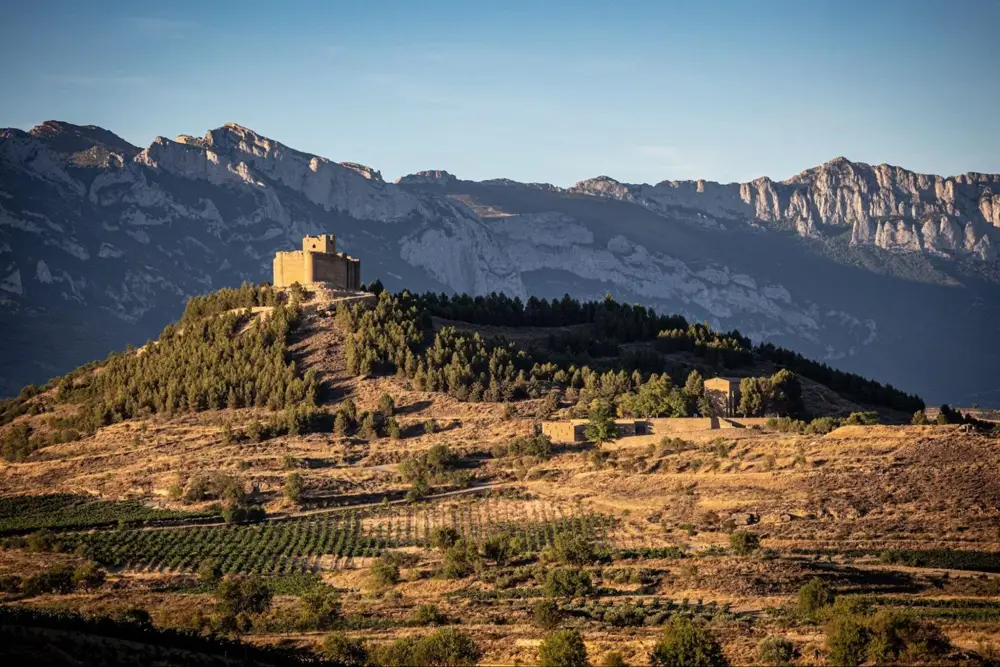
Today, producers across the region are embracing new grape varieties, terroir-driven classifications, and winemaking techniques that reflect both local history and global ambition. Whether you're an Iberian wine enthusiast or simply wine-curious, exploring Rioja means understanding a region that honors tradition while pushing boundaries. Let's embark this journey now with this comprehensive guide to Rioja's wine styles, grapes, travel tips and delicious recipes and wine pairings!
Rioja: Spain's Most Famous Wine Region
You may have seen Rioja on the wine bottle, but where is Rioja? The region lies in northern Spain. Administratively, this wine region ranges across the entire autonomous community of La Rioja and parts of the Basque country and the autonomous community of Navarre. Geographically, the region ranges along the Ebro River between the northern Sierra de Cantabria and southern Sierra de la Demanda mountain ranges.
Understanding the Subregions of Rioja
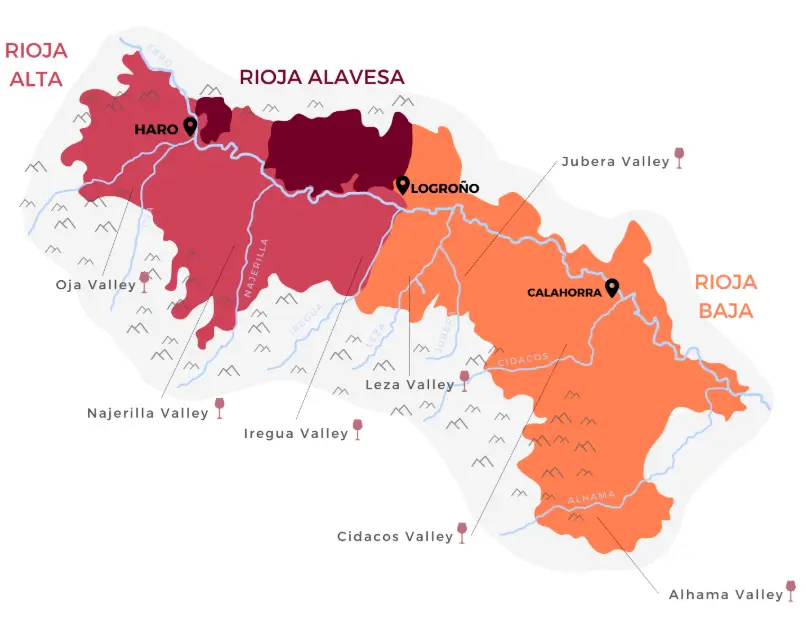
The wider region of Rioja comprises three different subregions; Rioja Alta, Rioja Alavesa, and Rioja Oriental.
Rioja Alta - Western & Continental
The most westerly of the three Rioja subregions, Rioja Alta is known for its continental climate and high altitude vineyards. The high altitude results in well balanced wines with bright acidity. Many of the most long lived wines in Rioja come from this region.
Rioja Alavesa - Basque & Continental
Located within the Basque Country in the north of the Rioja Region, Rioja Alavesa has a continental climate. Its vineyards combine limestone rich soils and higher altitudes, often resulting in wines with excellent fruit definition.
Rioja Oriental - Eastern & Mediterranean
Located in the east and mainly lower altitudes, Rioja Oriental has a more mediterranean climate and produces wines with a riper fruit expression, a full body, and enriching, higher, alcohol levels.
How to Plan a Wine Trip to Rioja from Madrid or Bilbao
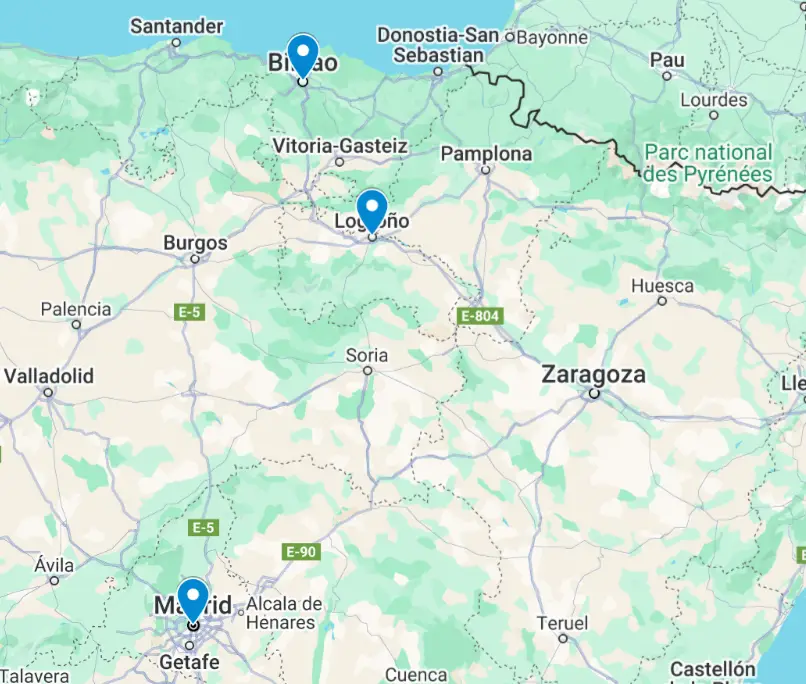
The proximity of Rioja to both the culinary capital of Bilbao and the cultural capital of Madrid makes it a key destination for anybody looking to add a wine region to their Spanish itinerary.
Rioja's regional capital, Logroño, is also its cultural hub, making it the obvious destination. The city is just 1.5 hours drive away from Bilbao. For those not looking to drive, trains are available from the Spanish capital of Madrid. The journey, involving one change, will last around 4 hours. The flexible travel options and a large number of producers open to visitors make it an easy region to tour. When it comes to planning your trip, the Consejo Regulador, or regulatory council for the region is a great place to start. If you can time your visit to coincide with the end of the harvest and the Fiestas de San Mateo that celebrate it.
Top Grapes of Rioja: Tempranillo, Garnacha, and Viura
Rioja is best known for its cultivation of the red grape Tempranillo. The red grape Garnacha Tinta, also known as Grenache Noir , and the white grape Viura, also known as Macabeo in other parts of Spain, are also widely grown.
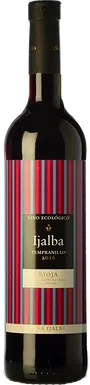
Tempranillo
As a thick skinned grape, Tempranillo produces wines with a deep but rarely opaque, colour intensity. The same thick skins result in a high level of fine-grained tannins should the winemaker seek to extract them. In the continental climate of Rioja Alta and Rioja Alavesa, where Tempranillo plantings are concentrated, the grape shows a bright acidity and ripens to a moderate alcohol level with a fruit flavour profile of red cherry and plum. Tempranillo shows a strong affinity for both new American and French oak. American oak use adds a bold toasted coconut note, while French oak adds a dill-like accent with a vanilla overtone.
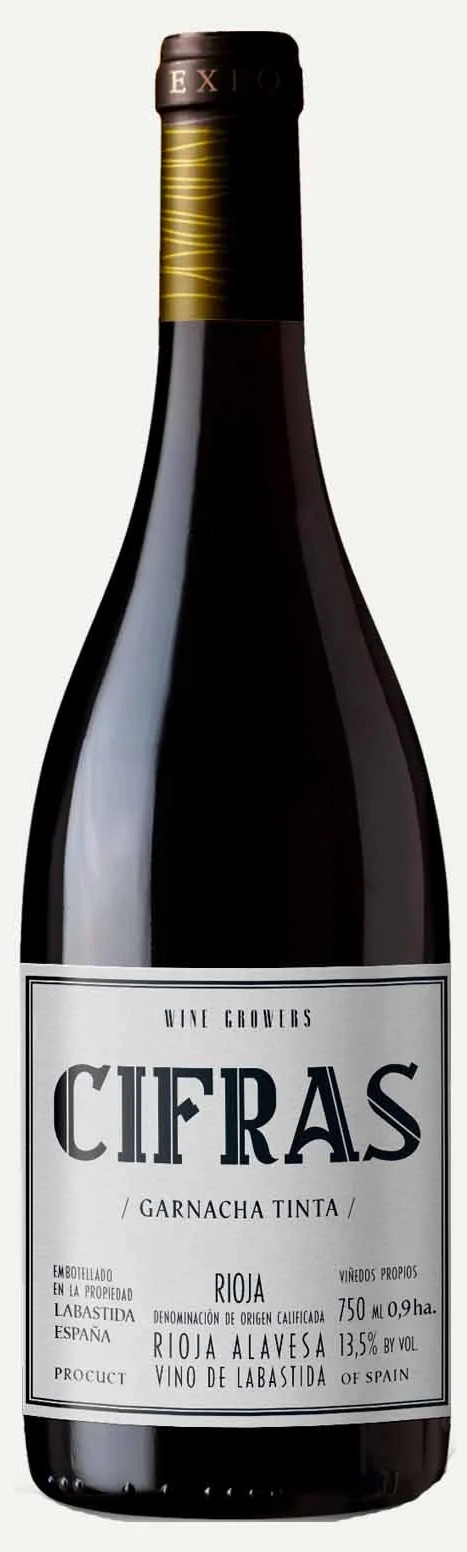
Garnacha Tinta
As a thin skinned grape, Garnacha produces wines with a moderate colour intensity that fades slightly towards the rim of the glass. The same thin skins result in a modest level of dusty tannins. Within Rioja, Garnacha plantings are concentrated in the more Mediterranean Rioja Oriental, where the grape shows a soft acidity, a generous body, alongside warming alcohol levels, and a flavour profile of strawberries, rose petals, and wild thyme. Garnacha shows a mild affinity for both new American and French oak with the floral aspects of its aromatic profile being easily overwhelmed by higher proportions of new oak.
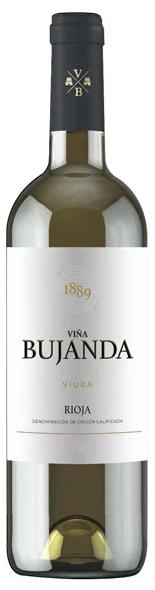
Viura
Viura can be made in both a fresh, fruit-driven, citrus & apple style, and an oxidative, savoury, nuts & bruised apple style. Possessing only modest acidity and yielding moderate levels of alcohol, Viura is akin to a blank canvas. It expresses its winemaking treatment with transparency.
Rioja Wine Classifications Explained: From Genérico to Gran Reserva
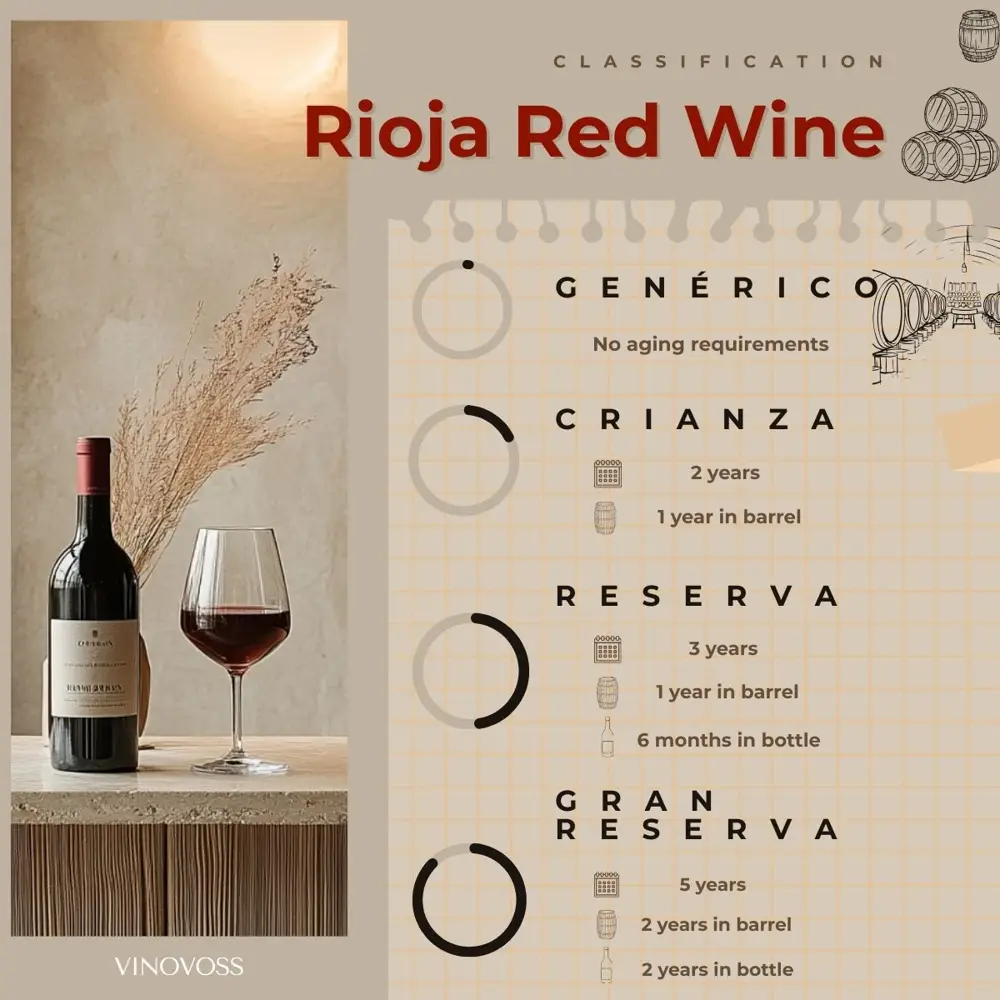
Like many classic wine regions in Europe, Rioja has a local quality hierarchy. In Rioja, quality is predicated on maturation, with the wine classified into tiers based on the amount of time spent in both oak barrels and in bottles.
The four tiers of the classification system are Genérico, Crianza, Reserva, and Gran Reserva. Stylistically, the four tiers fall into two groups. The first group is typified by its early drinking style, which is less likely to require, or benefit, from further aging after release, and comprises the Generico Rioja and Crianza Rioja tiers. The second group is typified by its later drinking style, which is more likely to require, or benefit, from further aging after release, and comprises the Reserva Rioja and Grand Reserva Rioja tiers.
The focus here is on the classification system for still, red Rioja. For still, white and rosado wines, the tiers are the same but the required aging time varies. The time spent aging in barrels is reduced to a minimum of 6 months and aging in the bottle is not mandated.
Genérico or Generic Rioja
Genérico, or just plain Rioja, is the entry point to the Rioja quality hierarchy. At this level there is no minimum period that the wine has to be aged, in barrel or in bottle, before the wine is released. At the same time, both barrel aging, potentially in new oak, and bottle aging are possible. A wide spectrum of wines results.
At one end of the Genérico Rioja spectrum, the wines are uncomplicated with a direct style focused upon exuberant, primary red fruit flavours. These wines usually have a moderate structure with neither the tannins nor the acidity being above moderate. They are approachable, refreshing wines, released early for immediate consumption.
At the other end of the Genérico Rioja spectrum, the wines are more complex and usually show the influence of maturation in barrel, but rarely maturation in bottle. The exuberant primary red fruit flavours and aromas of the wines is a common theme. The barrels used are often older and the maturation period is shorter, rarely exceeding 9 months. The barrels still impart coconut and vanilla notes to the wine but the structure of the wine is still approachable and the style youthful. They are fruity wines that have been enhanced with oak flavour for immediate consumption.
Genérico Rioja is a newer category that replaced one formerly known as Joven in 2017. Genérico is also a growing category due to demand in many export markets for young, fruity, oak influenced red wines at accessible price points, which were less unachievable with the longer mandatory aging of Crianza Rioja. The dynamic nature of Genérico Rioja makes it a window into what is happening in the region today.
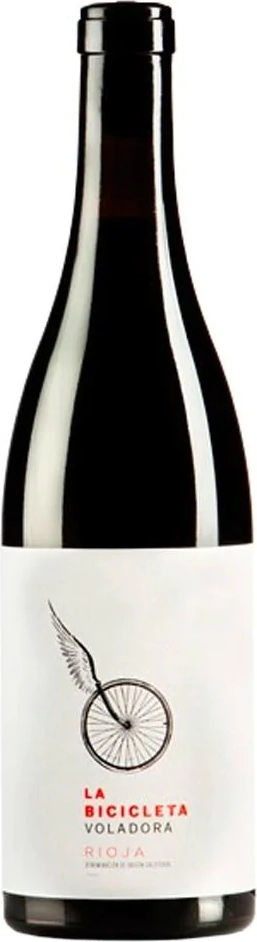
Crianza Rioja
Crianza Rioja must be aged for a minimum of 2 years. During the 2 year period of mandatory aging, the wine must spend at least 1 year aging in oak barrels. Aging in the bottle is not mandatory for this style of wine but in practice, wines will do so for between 3 and 6 months.
Both Genérico and Crianza Rioja are youthful styles where the wines offer an abundance of forward red fruit flavours and aromas. In some Genérico and all Crianza wines there will also be coconut notes from American oak use, dill & vanilla notes from French oak use, or both. The extra time that Crianza Rioja spends in barrel will make its oak flavours and tannins appear to be better integrated into the rest of the wine when compared to those found in Genérico Rioja. Like Genérico Rioja, Crianza Rioja is intended to be drunk immediately after release but it will hold in the cellar for a few years.
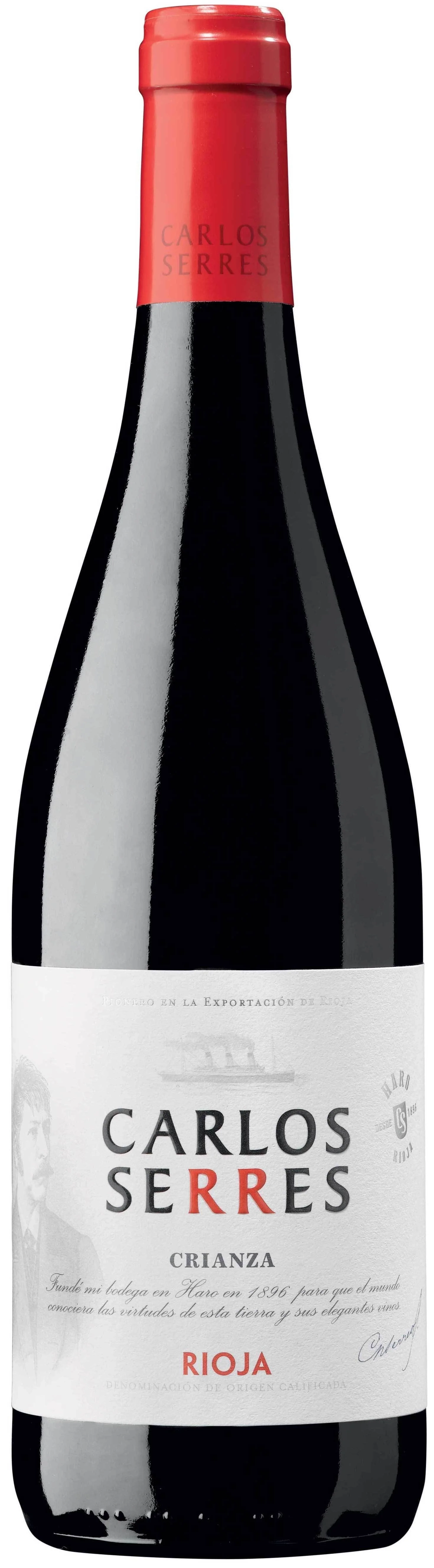
Reserva Rioja
Reserva Rioja must be aged for a minimum of 3 years. During the 3 year period of mandatory aging, the wine must spend at least 1 year aging in oak barrels and at least 6 months aging in bottle. In practice many Reserva wines spend 2 years aging in oak barrels and 1 year aging in bottle before release.
Compared to Genérico Rioja and Crianza Rioja both Reserva Rioja and Gran Reserva Rioja are more concentrated styles of wine that are capable of aging for a long time after they are released.
Additionally, the longer minimum aging time of Reserva Rioja, and Gran Reserva Rioja, means that they not only show primary red fruit, and secondary oak flavours, but they also begin to show tertiary notes of leather and game.
The hallmarks of the Reserva style are an intense, red fruited, primary flavour that has been enhanced by oak and is beginning to be further enhanced by tertiary development. Structurally, the wines show some resolution of tannins but the tannins can still resolve even further.
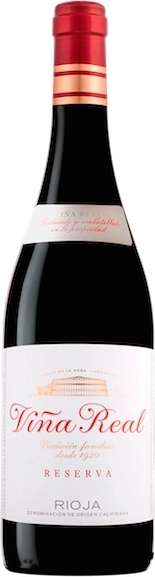
Gran Reserva Rioja
Gran Reserva Rioja must be aged for a minimum of 5 years. During the 5 year period of mandatory aging, the wine must spend at least 2 years aging in oak barrels and at least 2 years aging in bottle. Time is the major factor in Gran Reserva wines and it creates the three primary differences between Reserva and Grand Reserva Rioja in the glass.
Firstly, the longer oak aging of Gran Reserva wines means that its oak derived flavours, such as coconut, dill, and vanilla are much more integrated into the wine and appear seamlessly alongside the other aromas and flavours of the wine.
Secondly, the longer period of controlled oxidative aging in barrels means that the tannins in Gran Reservas are much more resolved than they are in Reserva wines.
Lastly, the longer period of in bottle maturation means that Gran Reserva have a more developed flavour profile with complex, emerging notes of leather and walnut while Reserva wines are more primary in nature.
Traditional vs Modern Rioja: How Oak and Aging Shape Style
The fact that most Rioja red wine spend time maturing in oak barrels has the potential to make them all sound very similar at first. However, many choices surrounding oak are available to the Riojan winemaker, such as oak origin and barrel age. The choices made can have a strong influence upon the final wine. The differences between wines that result from these choices lead to the wine being described as traditional, semi-traditional, semi-modern, or modern in its style. Style is yet another aspect of Rioja to explore.
Traditional Rioja
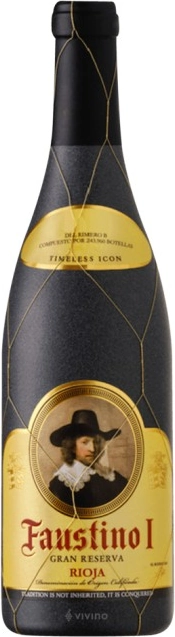
The traditional style of Rioja is long aged, often for far longer than the minimum required by the classification system. Aging of traditional style Rioja involves the use of American oak barrels. However, the barrels can be so old that they no longer contribute oak flavours to the wine. Instead they are used only for the influence of controlled oxidation. Wines made in the traditional style of Rioja are released to market when they are ready to drink and do not require further maturation. The hallmarks of the traditional style of Rioja are the gossamer-like texture of the fully resolved tannins and the savory complexity of leather-like tertiary development. Bodegas R. López de Heredia Viña Tondonia are one of the producers most closely associated with both the traditional style and long aging periods before release.
Semi-Traditional & Semi-Modern Rioja
The two categories of semi-traditional and semi-modern are sometimes combined into a single category. When they are, it is usually called semi-modern. VinoVoss has included both here to ensure that the meaning remains clear no matter how other people choose to describe things.
Both semi-traditional and semi-modern rioja represent a style that is somewhere between the traditional and the modern style. The style is characterised by wine that is aged for a shorter period in oak compared to the traditional style. Additionally, a higher proportion of the barrels used are new. Wines made in the semi-modern style are released to market in a more youthful state when their tannins are only partly resolved. As a result, the wines will often benefit from further aging. The wines show more primary fruit and less savoury, tertiary development.
Wines made in the semi-modern style also show overt oak flavours. The distinction between semi-traditional and semi-modern really lies on the dominant type of oak used. Wines that show a marked toasted coconut accent of American oak are semi-traditional. In contrast, those that show more the vanilla and dill influence of French oak are semi-modern. Of course, wines can also exhibit both these traits, and are best described as semi-modern when they do so. Bodegas Muga offers consistently high quality examples of the semi-modern style.
Modern Rioja
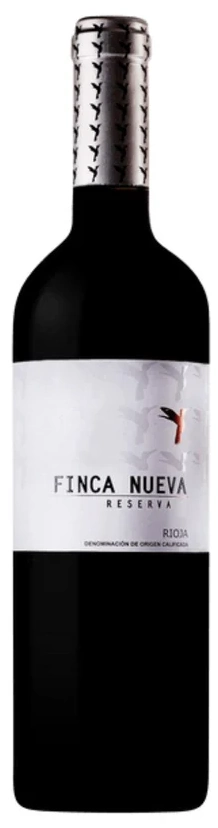
The modern style of Rioja is aged for a shorter period of time. Often, it is aged only up to the minimum required by the classification system. Aging of modern style Rioja relies upon French oak barrels. Additionally, a high proportion of the barrels, sometimes all of them, are new, imparting a pronounced level of oak derived dill and vanilla notes. Additionally, the new oak adds extra tannins, adding to the structure of the wine. The bolder structure and shorter maturation of modern style Rioja wines means that they often need additional cellaring after release before they will reveal their full potential. Wines made in the modern style have both ripe fruit expression and ripe tannins giving them a plush, opulent mouthfeel that is in perfect balance with its intense flavour profile. Bodegas Roda were one of the producers who pioneered this style of Rioja in the 1990s.
How Rioja Winemakers Are Adapting: Climate Change, Grape Shifts & New Trends
Wine is never one thing. Instead it is many things all at once. This is because the people who make it, the regions where it was made, and the countries it is made in, never stand still. On multiple levels, the context in which wine is made is constantly shifting, and wine shifts with it.
The traditions of the Rioja region are still upheld but the region is also moving in new directions at the same time. At the time of writing this is particularly notable in the areas of grape varieties and the perception of wine quality.
New Grape Varieties in Rioja
The grapes grown in a particular wine region can change over time. As time passes certain grape varieties can fall in and out fashion based on their properties, the climate and the needs of wine producers.
Different trends have influenced different parts of Rioja production. Climate change has influenced the choice of red varieties while quality potential and consumer preference has influenced the choice of white grape varieties.
Graciano & Mazuelo - The Emerging Red Grapes Of Rioja
The current era is one of climate change. As the climate changes, the different attributes an individual grape variety possess cause it become less or more suited to the emerging climate. The popularity of grape varieties can wax and wane as a result. This is the case in Rioja.
Although Tempranillo is still the core of Rioja, both Graciano and Mazuelo, also known as Carignan, are grapes on the rise whose position in Rioja has been strengthened by climate change.
Both Graciano and Mazuelo are late ripening grape varieties that require large amounts of heat and sunshine to fully ripen. In a warming climate this means two things. First, they ripen to a desirable level more consistently than they did in the past. Second, their late ripening, combined with their high natural level of acidity, yield wines with both a moderated alcohol level and a balanced sense of freshness.
Of the two varieties, Graciano is potentially the most interesting for two main reasons. Firstly, it is indigenous to the Rioja region, unlike Mazuelo which is grown in many other regions and countries. Secondly, the Graciano is more aromatically intense than Mazuelo. Its perfumed notes of blueberries and violets are more captivating than the less aromatically expressive Mazuelo.
Garnacha Blanca and Sauvignon Blanc - The Improving & The Familiar New Faces of White Rioja
It is not just the red grapes that are changing. Between 2017 and 2021 a big change happened in terms of wine consumption. For the first time people were drinking more white and rosé wine than red wine.
The regional focus of Rioja has traditionally been red wine. Yet, when the world makes a shift, wine regions have to catch up. Rioja has changed its approach to white grape varieties at both ends of the market as it seeks to update its white wines.
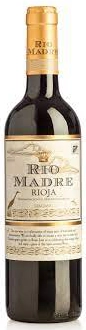
At the premium end of the market, producers in Rioja have been introducing more varieties to support the mainstay of Viura. The intention of this increased focus upon blending is to maximise quality potential by creating more complex wines with layers of flavour. Many of the grapes used are either indigenous or have a long history in the area, such as Tempranillo Blanco, Turrentés, Maturana Blanca, and Granacha Blanca. Garnacha Blanca with its saline mineral quality helps bring both freshness and complexity to modern high quality white Rioja making wines made with it worth seeking out.
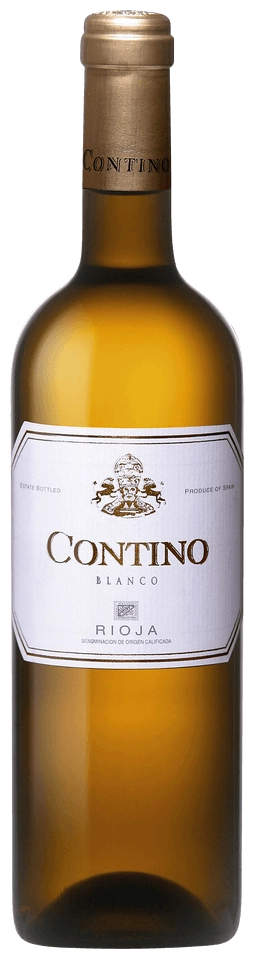
At the accessible end of the market, producers are introducing new grape varieties to help overcome the fact that Rioja is less widely known for its white and rosado wines. It is now possible to blend small amounts of the international grape variety, Sauvignon Blanc, with the local Viura where its telltale vibrant acidity and herbaceous, cut grass, aroma profile help make a new style of Rioja that is highly refreshing and more similar to other wines styles that are in high demand around the globe.
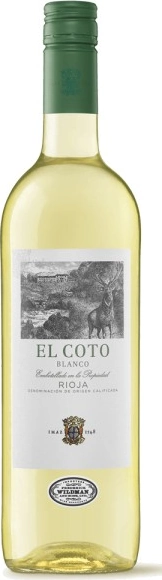
Innovative White Wines in Rioja for Burgundy Lovers
Due to the regional quality hierarchy being based partly upon time spent maturation in barrel, the use of oak is central to wine production in Rioja. Innovative winemakers are able to exploit this link by using new barrels to make oak influenced whites in addition to red wines.
Fermenting white Rioja in new oak barrels imparts bold notes of new oak toast to the wine within a short time frame. Furthermore, only a small amount of the potential oak flavour is extracted from the barrels, leaving them in ‘as new' condition for storing red wine once it has finished fermenting.
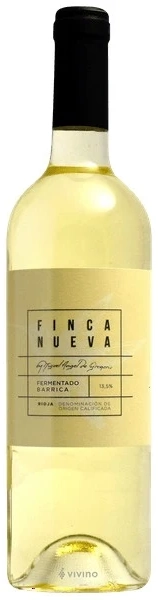
In addition to the more traditional, oxidative, oak influenced style of Rioja, many producers are now making barrel fermented wines with fresh primary fruit and overt new oak toast notes. The cost of the oak is usually factored into red wine production resulting in well priced, oak influenced, white wines that offer a great alternative to regional level Burgundy more accessible prices. The relative scarcity of grape varieties that have an affinity for new oak like Viura, and consumer demand for them are carving a new niche for Rioja.
Rethinking Rioja Quality: Why Place Matters More Than Aging Time
There is a flaw in Rioja's traditional quality hierarchy: it equates age with quality. Classifications like Crianza, Reserva, and Gran Reserva are based on mandatory aging periods, suggesting that older wine is inherently better. But this assumption doesn't always hold true.
Not every wine has the fruit concentration or structure to improve with time. Age can elevate a great wine—but it cannot transform a mediocre one. The system only works when producers select wines truly suited to extended aging.
Unfortunately, that's not always the case. The prestige of terms like Reserva and Gran Reserva helps sell bottles, and some producers have taken a volume-based approach, labeling wines with these terms regardless of whether the contents deserve them. The result is a glut of inconsistent wines that has eroded consumer confidence in the Rioja brand.
Such practices have also undermined quality-focused producers, whose quality-first wines are being lumped into the same category as mass-market offerings that share little in common—beyond time spent in a barrel.
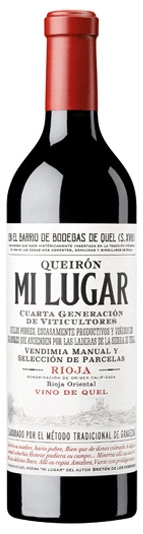
In response, some producers are moving away from the traditional hierarchy, embracing a more Burgundian approach that emphasizes origin over aging. New designations like Viñedo Singular, Zona, and Municipio support this shift, allowing wines to be defined by place rather than process. This new category is exciting but also slowly emerging, as it takes a long time for the lessons of terroir to solidify. It remains a space within the region to watch closely.
Easy Spanish Recipes to Pair with Rioja Wine
One of the many appealing aspects of wine is the ability it offers to travel in a glass. With the pop of a cork you can be transported to a distant region when you can try wine shaped by the local climate alongside regional cuisine. Here is both a Basque style pintos recipe and a Riojan style tapas recipe that will allow you to create a kaleidoscope of Iberian flavour at home to share with those closest to you.
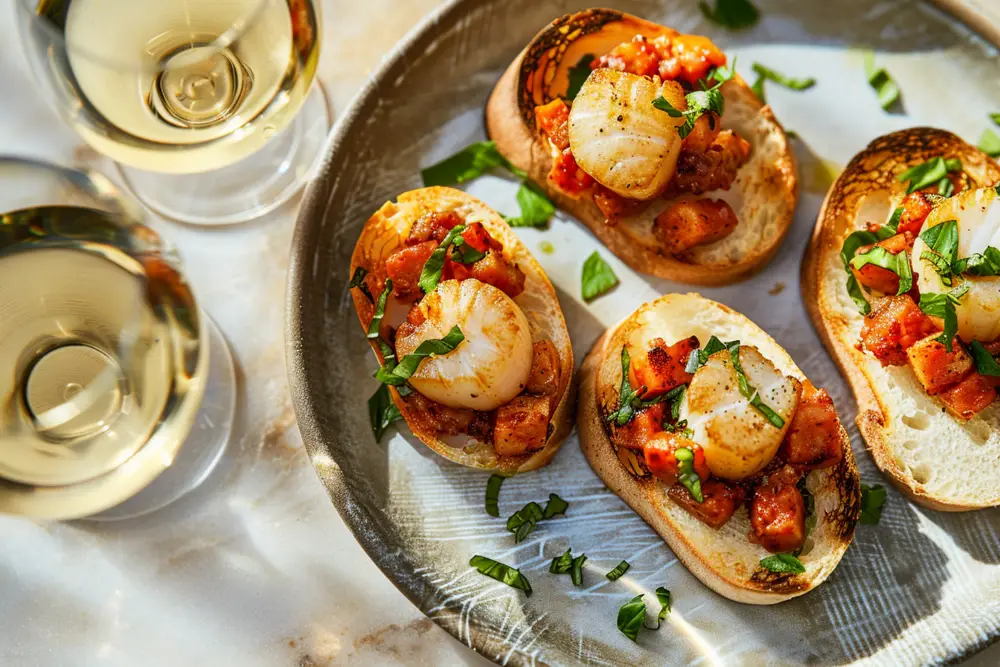
Basque Style Scallop with Chorizo & Lemon Aioli Pintxos
Servings:
4 (8 pintxos)
Ingredients:
- 8 sea scallops
- 3 oz Spanish chorizo, sliced
- 8 baguette slices
- Olive oil
- Salt & pepper
- 1/4 cup mayonnaise
- 1 garlic clove, minced
- 1 tsp lemon zest
- 1 tbsp lemon juice
Instructions:
- Whisk aioli ingredients and chill.
- Toast baguette slices at 400°F (200°C) with olive oil.
- Sear chorizo, set aside.
- Sear scallops (2 min/side).
- Assemble: Bread + aioli + chorizo + scallop.
Pair With:
Riojan Lamb Meatballs in Rioja Tomato Sauce
Servings:
4 (16 meatballs)
Ingredients:
- 1 lb ground lamb
- 1 egg
- 1/4 cup breadcrumbs
- 2 garlic cloves, minced
- 1 tsp cumin
- 1/2 tsp smoked paprika
- Salt, pepper, parsley
Sauce:
- 1/2 chopped onion
- 2 garlic cloves
- 1/2 cup Rioja red wine
- 14 oz crushed tomatoes
- 1 bay leaf
Instructions:
- Mix and roll meatballs.
- Brown in olive oil, set aside.
- Sauté onion/garlic, add wine to reduce.
- Add tomatoes, bay leaf, simmer 10 min.
- Return meatballs, cook 15 min more.
Pair With:
Your Next Glass of Rioja Awaits
Rioja's enduring appeal lies in its dual nature — a region steeped in heritage yet always reaching for something more. Whether you're drawn to the classic charm of long-aged Gran Reserva or the precision of a single-vineyard Viñedo Singular wine, Rioja has a bottle for every palate and occasion.
Now is the perfect time to explore, or revisit, this dynamic region. Taste the evolution for yourself — in your local wine shop, on a restaurant list, or ideally, in a glass with a view of the Ebro Valley.
Ready to dive deeper into Rioja? Browse our top bottle picks, plan your next vineyard trip, or sign up for more wine insights at VinoVoss.
Matthew Cocks