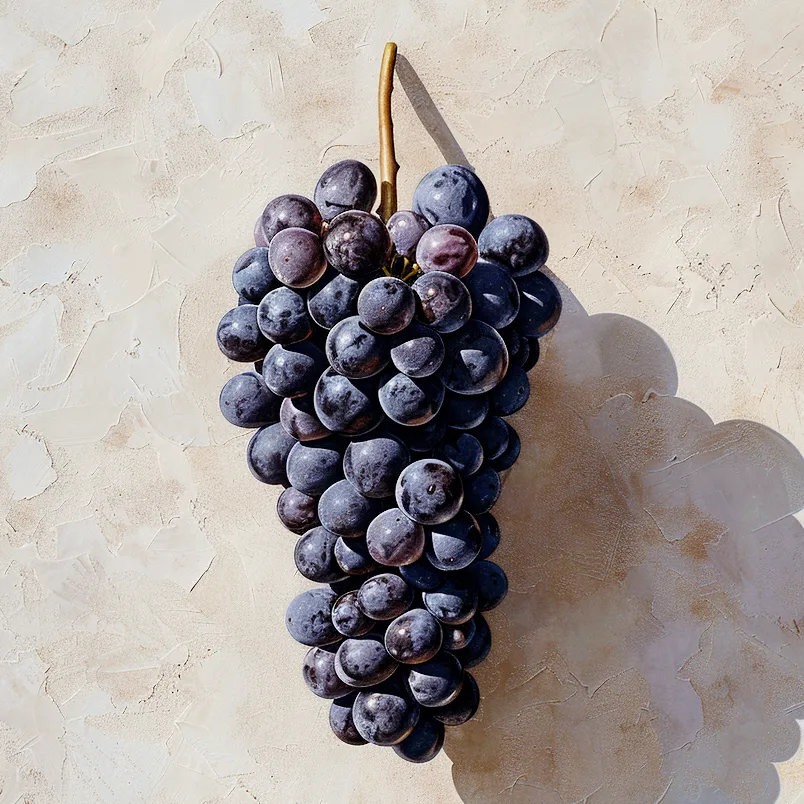
Negrara Veronese
Negrara Veronese is a red grape variety native to Italy, primarily cultivated in the Veneto region, especially around Verona, Vicenza, and Padua. It was first documented in 1824 by the biologist Ciro Pollini. Despite its synonyms and morphological similarities, Negrara Veronese should not be confused with other varieties such as Negrara Trentina, Raboso Veronese, or Teroldego. Genetic analysis in 2008 revealed a close relationship with the Gruaja variety. This medium to late-ripening variety is vigorous and is used in DOC wines such as Bardolino, Breganze, Valdadige, and Valpolicella.
Negrara Veronese wines typically exhibit vibrant color and aromatic complexity, with notes of red fruit such as cherry and raspberry, along with subtle floral and spicy undertones. The palate is balanced, with medium acidity and soft tannins, making it suitable for blending as well as for single-variety wines.
The grape is mainly grown in the Veneto region of Italy, particularly in the provinces of Verona, Vicenza, and Padua. It plays an important role in the production of DOC wines, especially Bardolino, Breganze, Valdadige, and Valpolicella, where it contributes to the structure and depth of the wines.
Despite its various synonyms, Negrara Veronese was identified as a distinct variety after DNA analysis in 2008.
Its close relation to the Gruaja variety helps explain its aromatic complexity and its important role in the wines of the Veneto region.