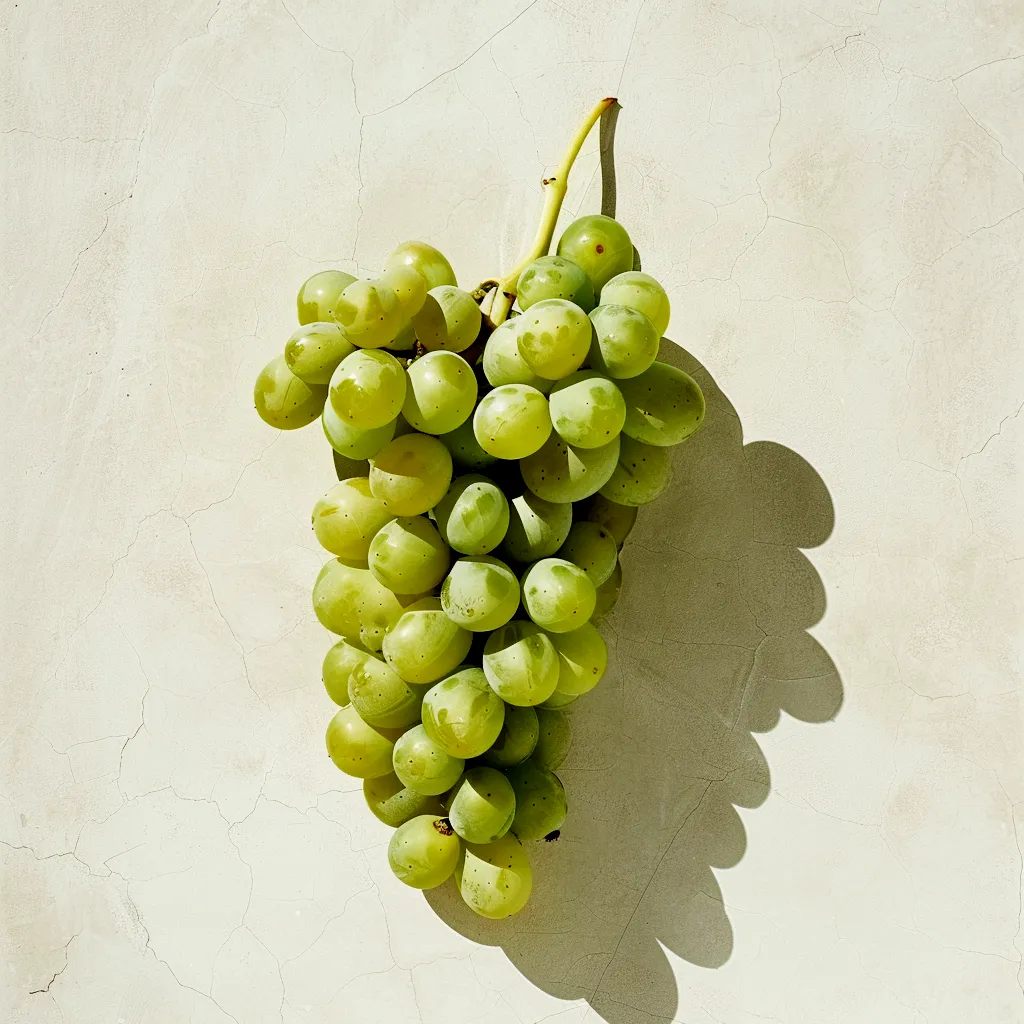
Kalina
Kalina is a rare Swiss white grape variety of unknown parentage, created in 1970 at the Meier vine nursery. It is cultivated in Aargau, Switzerland, where it is valued for both winemaking and as a table grape. The variety ripens early to mid-season and is known for its resistance to frost and fungal diseases, although it is highly susceptible to downy mildew. Kalina produces aromatic, fresh wines with good structure, making it a versatile grape in Swiss viticulture. A different grape with the same name exists in Serbia, where it is primarily used as a table grape.
Swiss Kalina wines have a light golden hue and offer fresh, fruity aromas. They are well-structured with a balanced acidity, making them refreshing and easy to drink. The wines are often aromatic, displaying hints of orchard fruits and floral undertones.
Kalina is mainly grown in the Aargau region of Switzerland, where it benefits from a cool climate and a long growing season. Its resistance to frost makes it particularly well-suited to Swiss vineyards, though it requires careful management due to its vulnerability to downy mildew. The Serbian Kalina, also known as Radmilovac Bocr, is a hybrid variety bred in 1996 from Muscat d'Hamburg and Villard Blanc, mainly cultivated as a table grape.
Unlike the Swiss Kalina, which is primarily used for wine production, the Serbian Kalina is a table grape with Muscat-like aromas.
It was bred with genes from Vitis berlandieri, Vitis rupestris, and Vitis vinifera, giving it a different genetic background and purpose.