Enfariné Noir
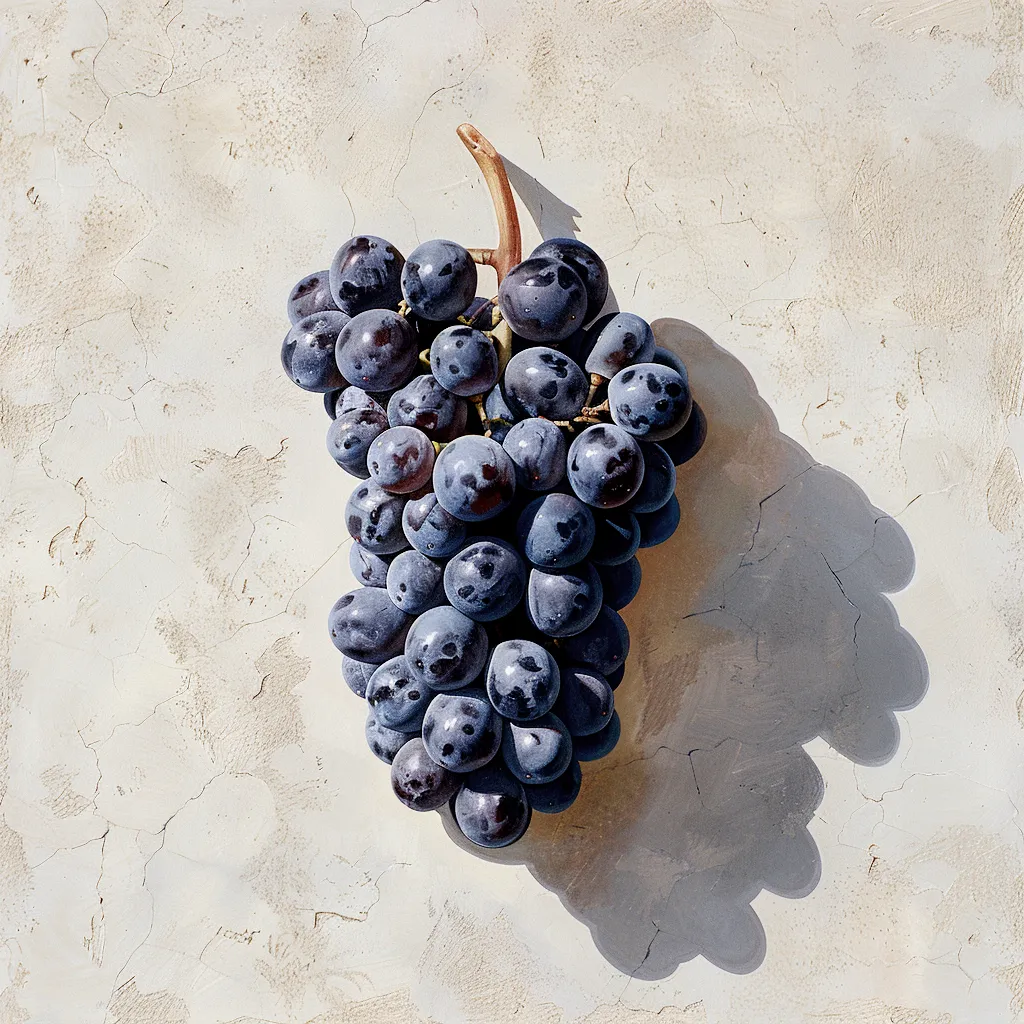
Enfariné Noir is an ancient grape variety native to the northeastern regions of France, including the Jura, Yonne, and Burgundy. It is believed to be a descendant of Gouais Blanc. The grape is currently in danger of extinction, though it is still listed in the official Catalogue of French vine varieties. Enfariné Noir is known for its small, compact clusters of medium-sized, irregular berries with a thick skin that is bluish-black and covered in a white powdery bloom, giving the grape its name.
Enfariné Noir wines are typically tannic, astringent, and acidic, with a deep rubicon color. The wine has a pleasant bouquet and is capable of aging well. When produced in high quantities, the wine tends to be less colored, more acidic, and very harsh. Aromatically, it can exhibit notes of apple, raspberry, and banana, adding complexity to its profile.
This grape is traditionally found in the Jura, Yonne, and Burgundy, where it thrives in calcareous soils. It is known for its high vigor and fertility, though it requires careful management to avoid overproduction, which can compromise wine quality. Enfariné Noir is sensitive to wind during harvest, which can cause the fragile peduncles to break. It is resistant to gray rot but needs protection from pests.
The name 'Enfariné' comes from the powdery bloom that covers the grapes, giving them a unique appearance.