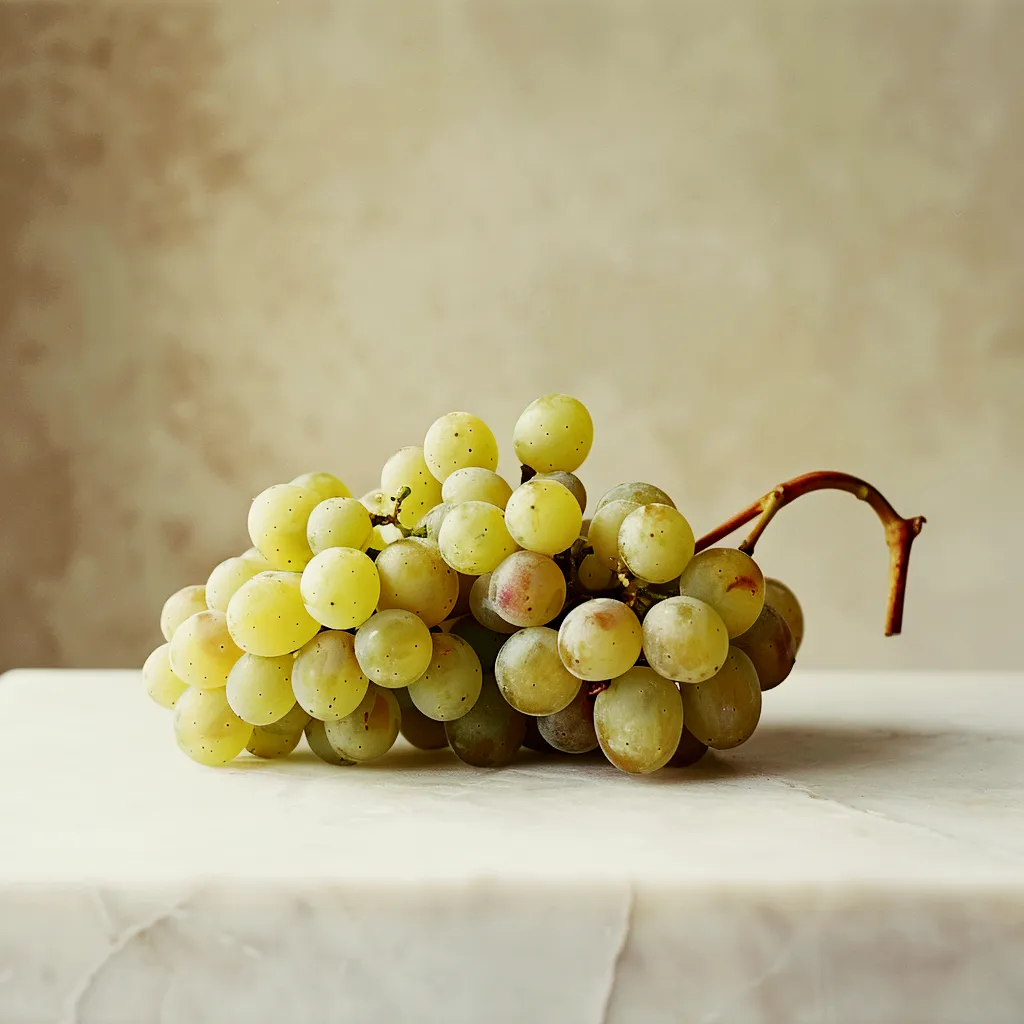
Colombaud
Colombaud is a white grape variety originating from Provence, France, known for its historical use as both a table grape and a wine grape. First mentioned in 1623, the variety is also known by several other names, including Aubié, Bouteillan, and Couloumbat Blanc. Although it is no longer widely cultivated, Colombaud was once valued for its ability to thrive in hot, infertile soils. The grape is late-ripening and produces wines that are dry, clear, and acidic. Despite its historical significance, it is now found in very small quantities, primarily in the Var department of Provence.
Colombaud wines have a golden yellow hue with an amber veil on the sun-exposed side of the berries. The wines are characterized by their sharp acidity and freshness, with dry and clear profiles. The flavor is simple yet pleasant, with a slightly tangy and firm pulp. The berries themselves are juicy and have a firm consistency, and the wines often carry citrus and floral notes with a touch of minerality.
Colombaud is primarily found in Provence, particularly in the Var department, where it is adapted to hot, sun-drenched, and poor soils. The variety is very vigorous and typically grown using short pruning methods. Due to its late-ripening nature, it is harvested in the third ripening period, usually in late autumn. Colombaud is susceptible to fungal diseases, including grey rot, and requires careful management in the vineyard.
Colombaud is often confused with Colombard due to the similarity in name, but it is a completely different variety with distinct characteristics.
Once commonly used in the production of both table grapes and wine, Colombaud now has very limited plantings, with only a small number of vines remaining in Provence.