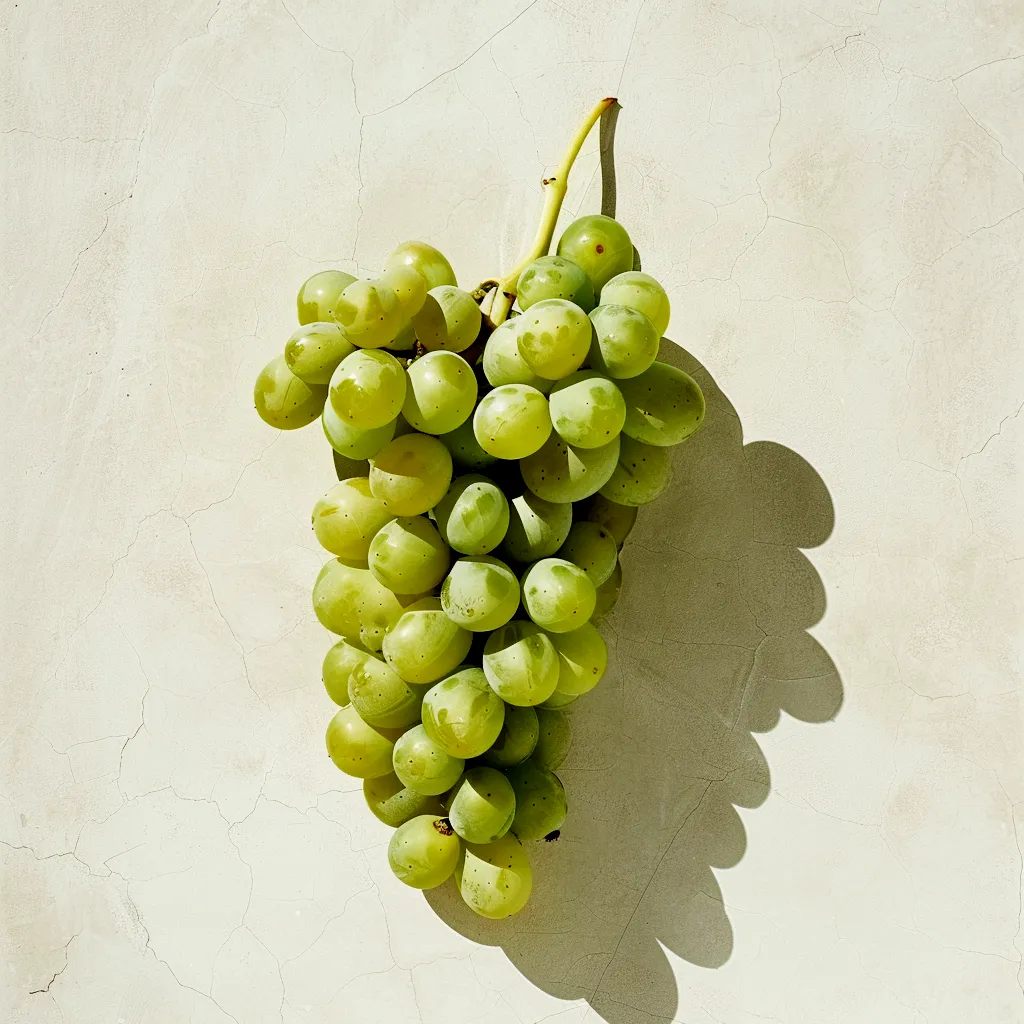
Coda di Pecora
Coda di Pecora is a historic, indigenous grape variety from the Alta Campania region of Italy. Its name refers to the cluster's shape, which resembles a sheep’s tail. After years of confusion with Coda di Volpe, DNA analysis confirmed its distinctiveness in 2005. First mentioned in 1875 by ampelographer Giuseppe Frojo, Coda di Pecora is now being revived and cultivated by the winery Il Verro, which has become the primary producer of wines from this grape. Its cultivation focuses on preserving local biodiversity and history.
Coda di Pecora wines are still relatively rare, but they are known for their aromatic complexity and expressive profile. The wines from this grape often show rich, floral, and fruity notes, with an underlying minerality that reflects the region's terroir. The first Metodo Classico sparkling wine made from this grape, 'Sheeep,' has garnered attention for its high-quality craftsmanship.
Native to Alta Campania, Coda di Pecora is cultivated in the ancient Baronia di Formicola region, between Mount Maggiore and the Volturno River. The grape is a symbol of the local history and biodiversity that Il Verro Winery is working to preserve.
Coda di Pecora was first documented in 1875 and has been revived in recent years.
It is still primarily produced by the winery Il Verro, which also created the first Metodo Classico sparkling wine from the variety, 'Sheeep.