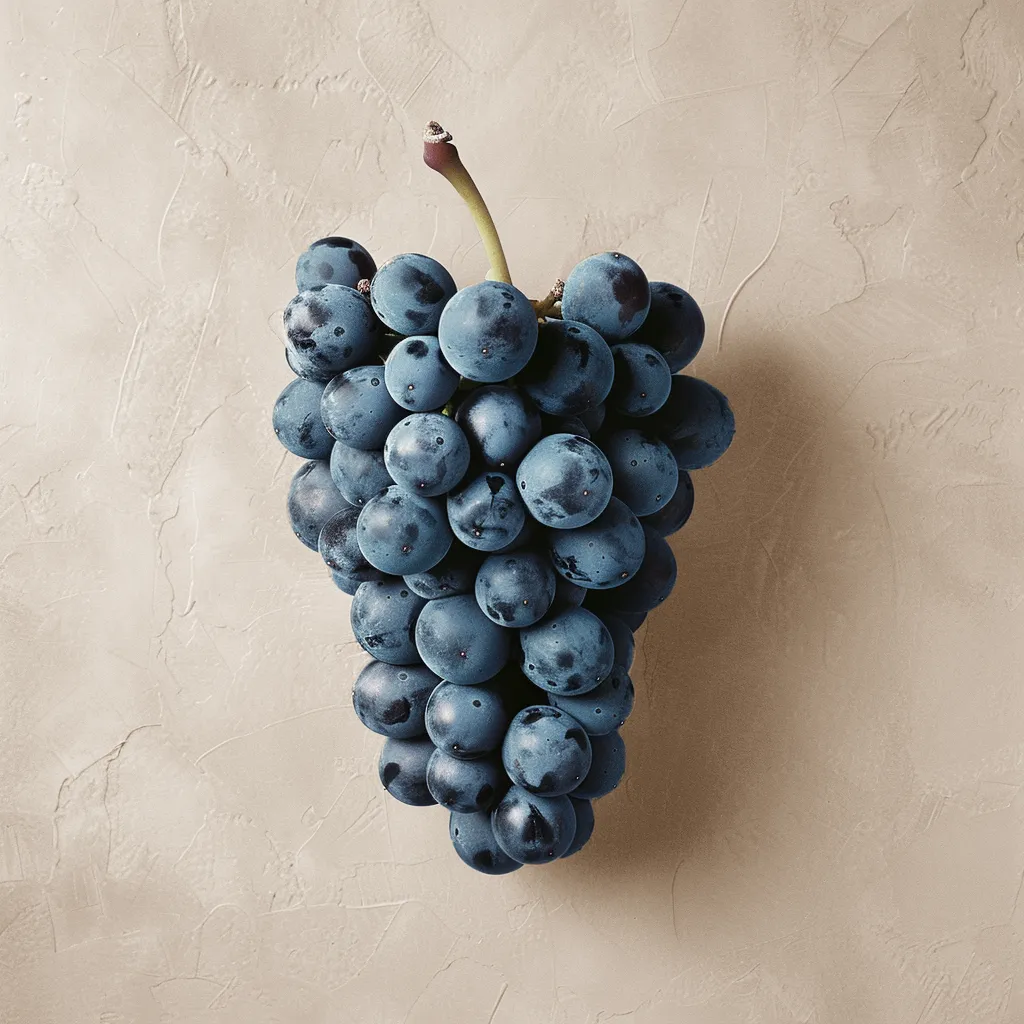
Clinton
Clinton is an American hybrid grape, originating in 1821 from a cross between Vitis riparia and Vitis labrusca. Known for its hardiness, it is resistant to phylloxera and frost, and was historically used in the northeastern United States and northern Italy. Though it is not a permitted variety in Italy, small plantings still exist. Clinton produces dark-colored, acid-driven wines with a distinct ‘foxy’ flavor. It was traditionally grown in small, artisanal wine-making areas and is now mostly forgotten, with limited cultivation today.
Clinton wines are dark in color with a characteristic acidity and a distinct 'foxy' flavor, which comes from its labrusca parentage. The wines are typically rustic with a bold, earthy profile, often described as tannic and bitter. The grape is also used for table grapes and rootstock.
Clinton is primarily found in the northeastern United States, though it was historically planted in northern Italy and parts of Switzerland after the phylloxera crisis. Today, its cultivation is rare, and it is mostly used in small-scale, artisanal wine production in these regions.
Clinton is also known by various other names, including Plant des Carmes, Worthington, and Bacchus.
Despite its low profile today, it once played a crucial role in the post-phylloxera recovery in both the United States and northern Italy, where it was often used to make inexpensive, community-driven wines.