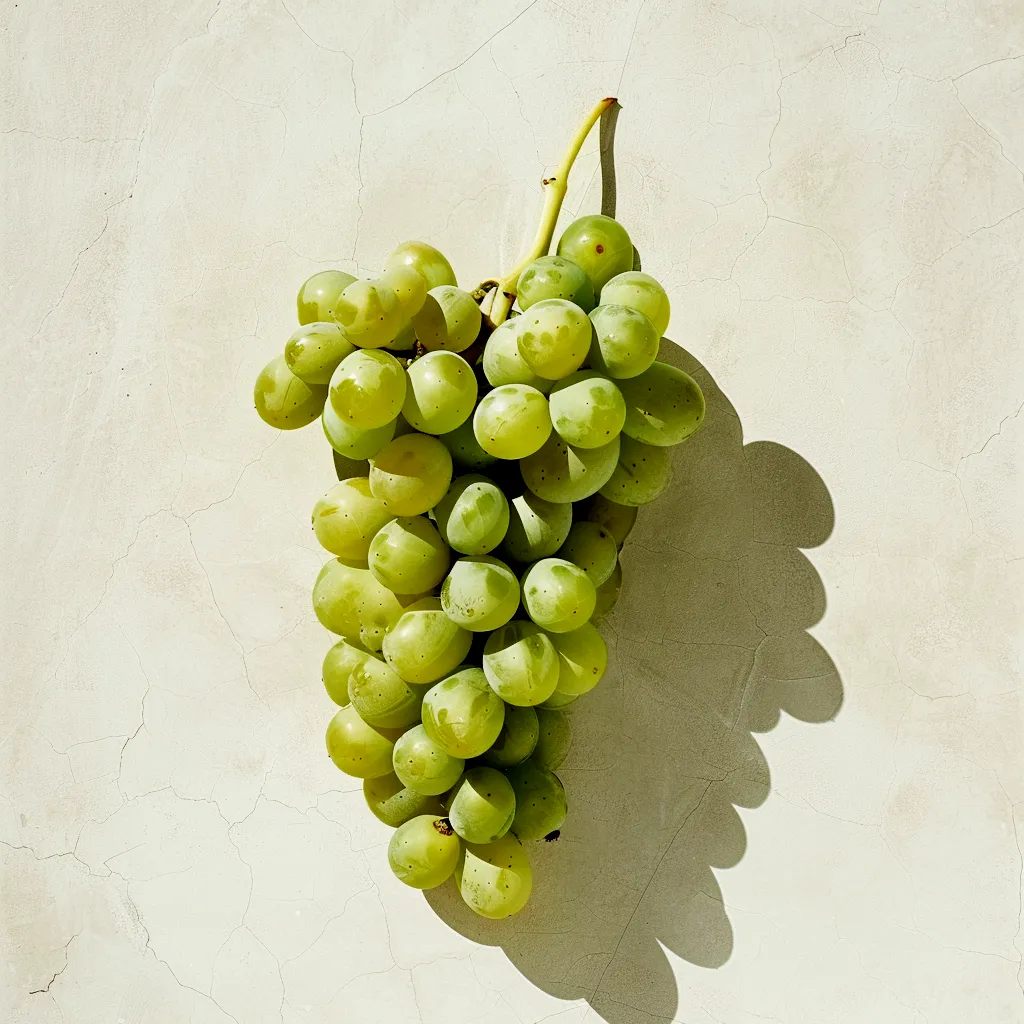
Carignan Blanc
Carignan Blanc is a rare Mediterranean white grape variety, primarily found in the Languedoc region of France, where only about 250 hectares remain. It is a white-berried mutation of Carignan Gris and is now considered endangered. Despite its decline, Carignan Blanc remains valued for producing wines with pronounced minerality and refreshing acidity. It is often used as a complementary variety in blends for appellations such as Faugères, Languedoc, and Saint-Chinian.
Carignan Blanc wines are typically pale yellow with bright, golden reflections. They are known for their fresh and mineral-driven character, with aromas of vanilla, stone fruits, white flowers, and hints of brown sugar. The wines tend to have moderate alcohol levels, offering a balanced and crisp profile, making them ideal for pairing with light dishes.
Carignan Blanc is primarily cultivated in the Languedoc region of southern France, particularly in appellations such as Faugères, Languedoc, and Saint-Chinian. Its plantings are scarce, with only around 250 hectares remaining. The variety thrives in warm Mediterranean climates with plenty of sunshine, which allows it to reach full ripeness. It is typically grown on dry, rocky soils that contribute to its distinctive minerality and freshness. Due to its late ripening nature, it requires careful vineyard management to achieve optimal balance in the final wine.
Carignan Blanc originates from a natural mutation of Carignan Gris, itself a mutation of Carignan Noir.
Due to its limited plantings, it is now considered an endangered grape variety, despite its historical presence in Mediterranean viticulture.