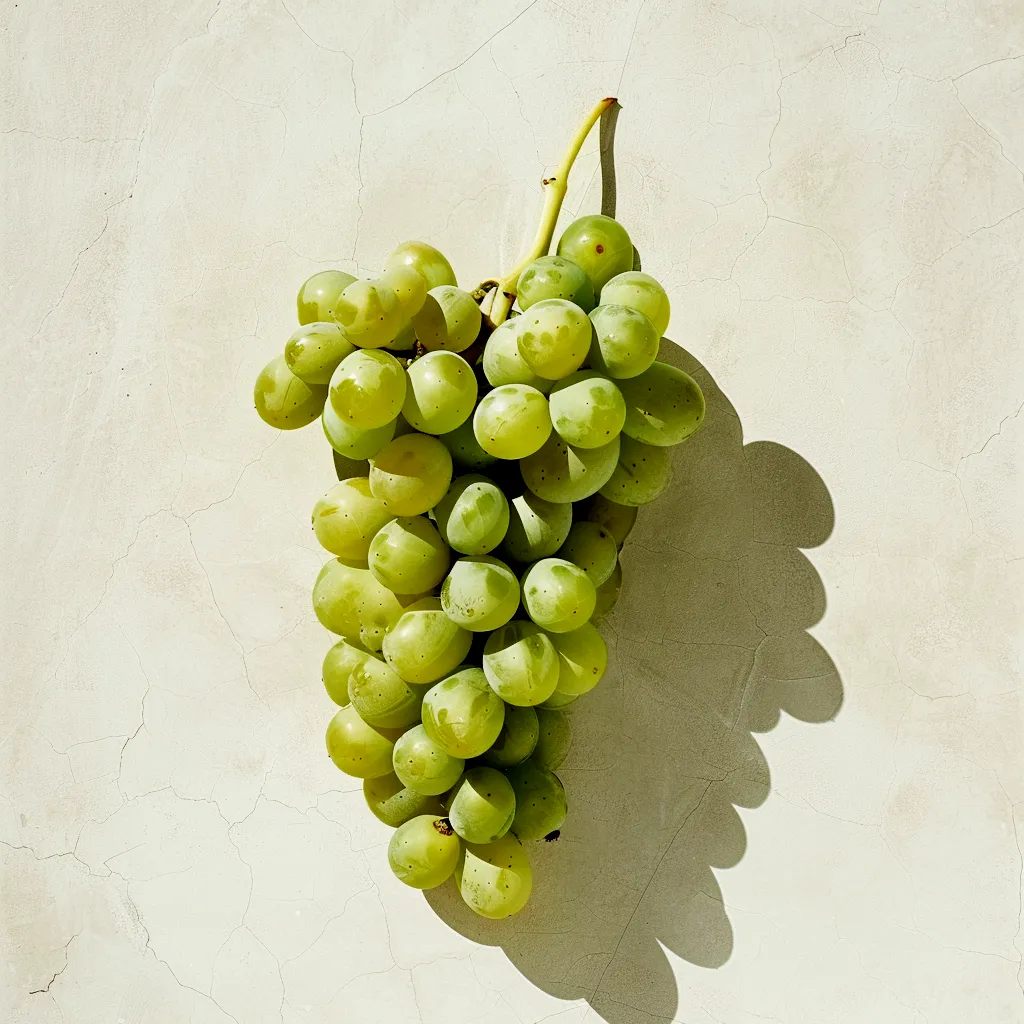
Calagraño
Calagraño, also known as Navès, is an indigenous white grape variety from Spain, primarily found in the Basque Country, Rioja, and Valenciana regions. It was once widely planted but declined after the 1970s due to the dominance of Tempranillo. The grape is known for its high acidity, thick skin, and vigorous growth. While it produces rustic and often harsh wines, it can develop more character when aged in oak barrels. Calagraño is rare today, surviving mainly in old vineyards with low yields.
Calagraño wines are characterized by their high acidity and lack of aromatic complexity. The wines can be harsh and lack fruit-forward aromas, but when controlled, they offer fresh and structured wines with the potential for aging. They are often used for their acidity in blends and can provide a natural acid correction for other wines.
Calagraño is cultivated in small quantities in the Rioja and Basque regions. Its cultivation peaked in the 1970s, but by 2016, it had nearly vanished due to its high yield and lack of elegance. Today, it is found in old, unclassified vineyards and is used by some producers who value its freshness and acidity for blending, particularly in warmer regions like Aldeanueva.
Despite being largely overlooked and nearly extinct, Calagraño, or 'Pasera' as it is also known, has found advocates among some winemakers in Rioja who value its natural acidity and character.
The grape is considered a part of Rioja's ancestral culture, and while its use is restricted, some winemakers continue to defend its place in modern wine production.