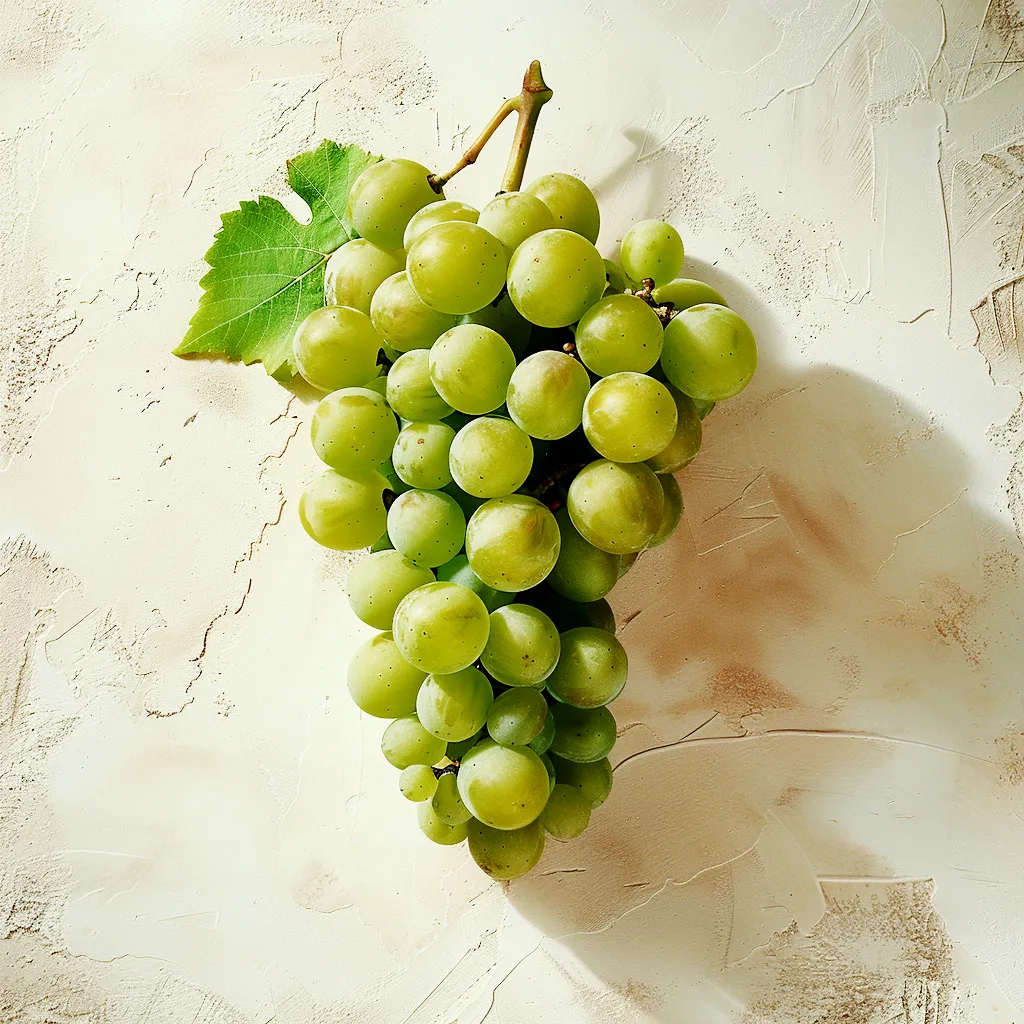
Baroque
Baroque is a rare white grape variety originating from the Adour Valley in southwestern France, particularly in the Tursan and Floc-de-Gascogne appellations. It is believed to be a cross between Folle Blanche and Sauvignon Blanc, though some also suggest it may have traveled to the region from Galicia via pilgrims on the Santiago di Compostela route. Once widely planted, its presence has diminished over time, but recent efforts have helped preserve the variety. Baroque is known for producing wines with crisp acidity and high alcohol content, offering unique flavors of pear and hazelnut.
Baroque wines are golden in color and offer a dry, vibrant palate. The wines feature a crisp, refreshing acidity with fruity notes of pear and a touch of hazelnut. The aromatic profile often carries grassy notes, characteristic of its Sauvignon Blanc parent, along with a clean, structured finish.
Baroque is primarily grown in the Tursan region of southwestern France, where it constitutes a significant portion of the white wine blends. The variety is often blended with Gros Manseng to produce Tursan white wines. Baroque is well adapted to the local terroir and can withstand oidium, but its yield is typically lower and more irregular, contributing to its rarity today. It is used both in dry wines and, in some cases, in the production of Floc-de-Gascogne, a local fortified wine.
Baroque is sometimes called 'Petit Bordelais' or 'Bordelais blanc' and was once extensively planted in the region before the 20th century decline.
Despite its scarcity today, it plays a vital role in Tursan wines and has a unique ability to balance high alcohol with crisp acidity, a rare combination in wine production.