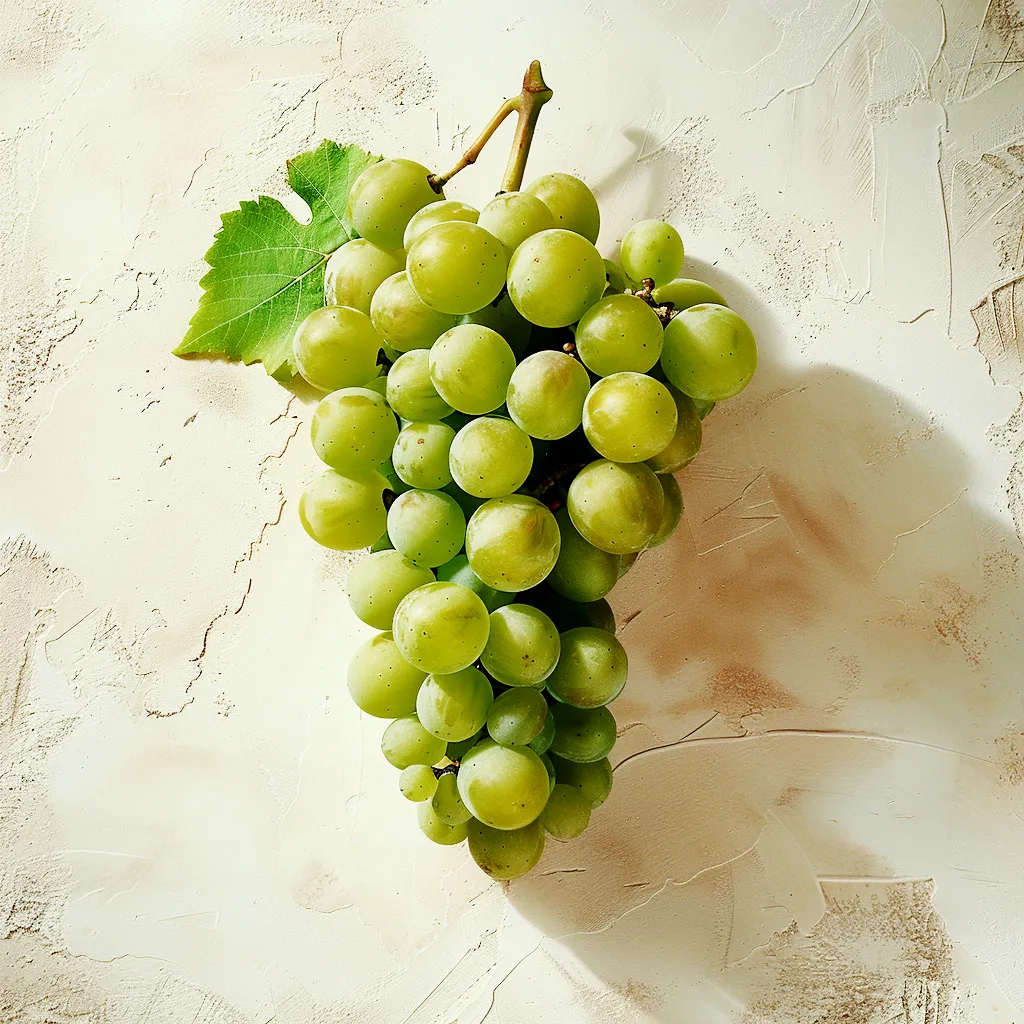
Arrufiac
Arrufiac is an ancient white grape variety native to the Adour Valley in the South-West of France, particularly known for its role in the Pacherenc du Vic-Bilh and Côtes de Saint-Mont AOCs. The grape dates back to the 17th century and is prized for its aromatic complexity and role in enhancing the balance and structure of wines. With small to medium-sized clusters and thick-skinned, juicy berries, Arrufiac produces wines that are rich in alcohol and aromatic intensity. The variety is still cultivated in limited quantities, with around 100 hectares planted in France today.
Arrufiac wines have a pale yellow color and are known for their distinctive aromas of citrus fruits (lemon, clementine, orange), exotic fruits (mango), and floral notes, often with a hint of honey or pastry. On the palate, the wine is alcoholic and bouqueted, with a structured and balanced mouthfeel. The wine is typically used in blends, particularly in the production of the region's sweet and dry Pacherenc wines.
Arrufiac is most commonly found in the South-West of France, specifically in the Adour Valley, where it plays a significant role in the Pacherenc du Vic-Bilh and Côtes de Saint-Mont AOCs. It represents 30% of current plantings in the Pacherenc du Vic-Bilh region. It is a late-ripening variety that requires careful vineyard management due to its susceptibility to diseases such as mildew, oidium, and gray rot. In the best vintages, it is harvested in successive passes to contribute to both dry and sweet wine styles.
Although Arrufiac is often confused with Raffiat de Moncade, a different grape of similar origin, the two should not be confused.
Arrufiac has been an integral part of the region's wine production since the 17th century and is considered one of the most distinctive varieties in the Pacherenc wines due to its floral and balsamic aromas, including the signature 'flint' note.