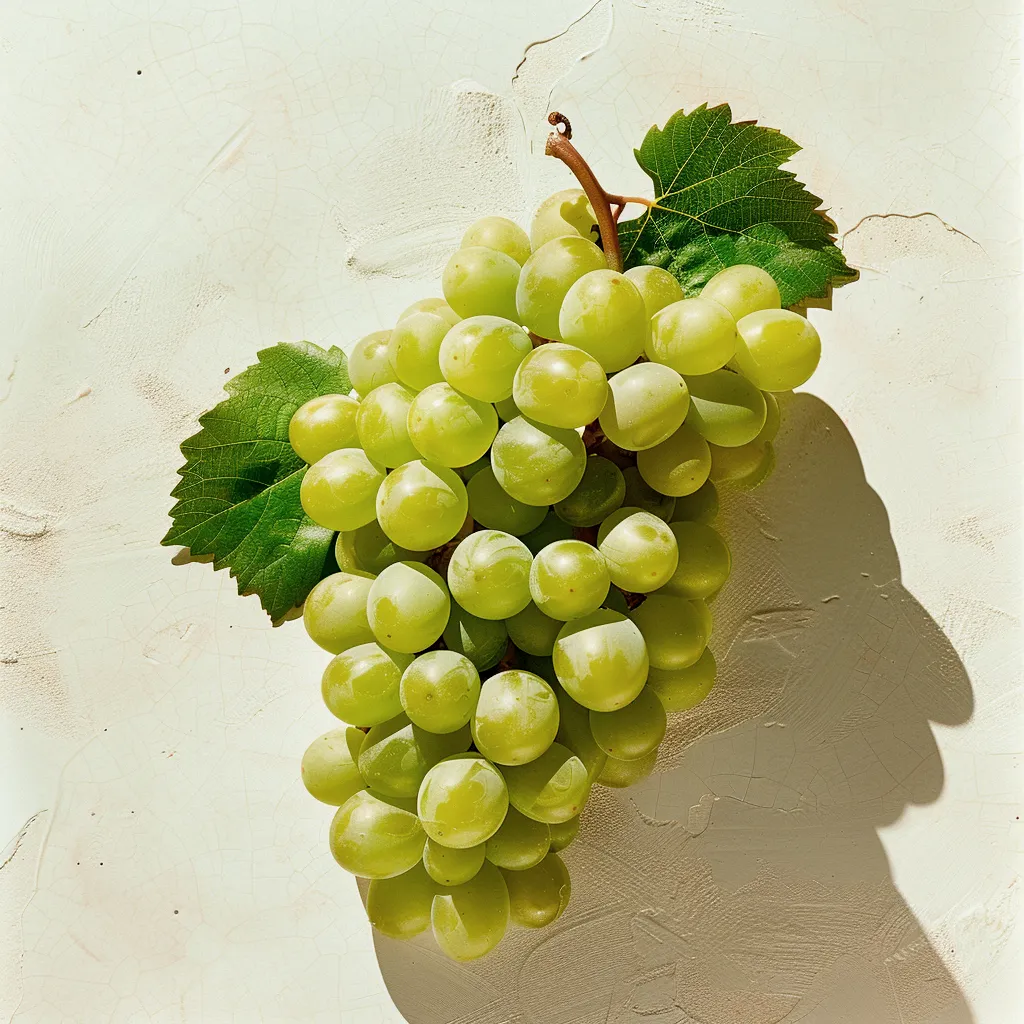
Agronómica
Agronómica is a white grape variety that originated in Portugal, created as a hybrid between João de Santarém (Castelão Francês) and Muscat d'Hamburg. Initially developed in the late 19th century by José Leão Ferreira at the Agronomic station, the variety was introduced as a response to the issue of low yields. While its parentage was originally believed to be João de Santarém and Muscat d'Hamburg, DNA analysis has shown discrepancies in this claim. Agronómica is primarily grown in the northern regions of Portugal, as well as in the Azores and central areas. The variety thrives in regions where vineyards were abandoned and not replaced by modern, oenologically improved varieties, particularly on the island of Pico.
Agronómica wines are characterized by a vibrant color and smoky flavors. The wines typically have a light body and low acidity, with subtle aromatic profiles that reflect its heritage. It produces wines with a delicate balance and light color, known for their low alcohol content and smooth finish.
Agronómica is mainly cultivated in northern Portugal, the Azores, and central Portugal. The variety was historically planted in regions where older vineyards were left unrenewed, allowing it to remain in areas such as the island of Pico. Despite its origins as a high-yield variety, Agronómica has not seen widespread adoption outside of these regions.
Agronómica's creation was driven by the need for a more productive variety with better yields, yet it remains largely confined to areas with older, unmodified vineyards.
Its ability to thrive in these less intensively managed sites is one of the reasons it persists in certain regions of Portugal.