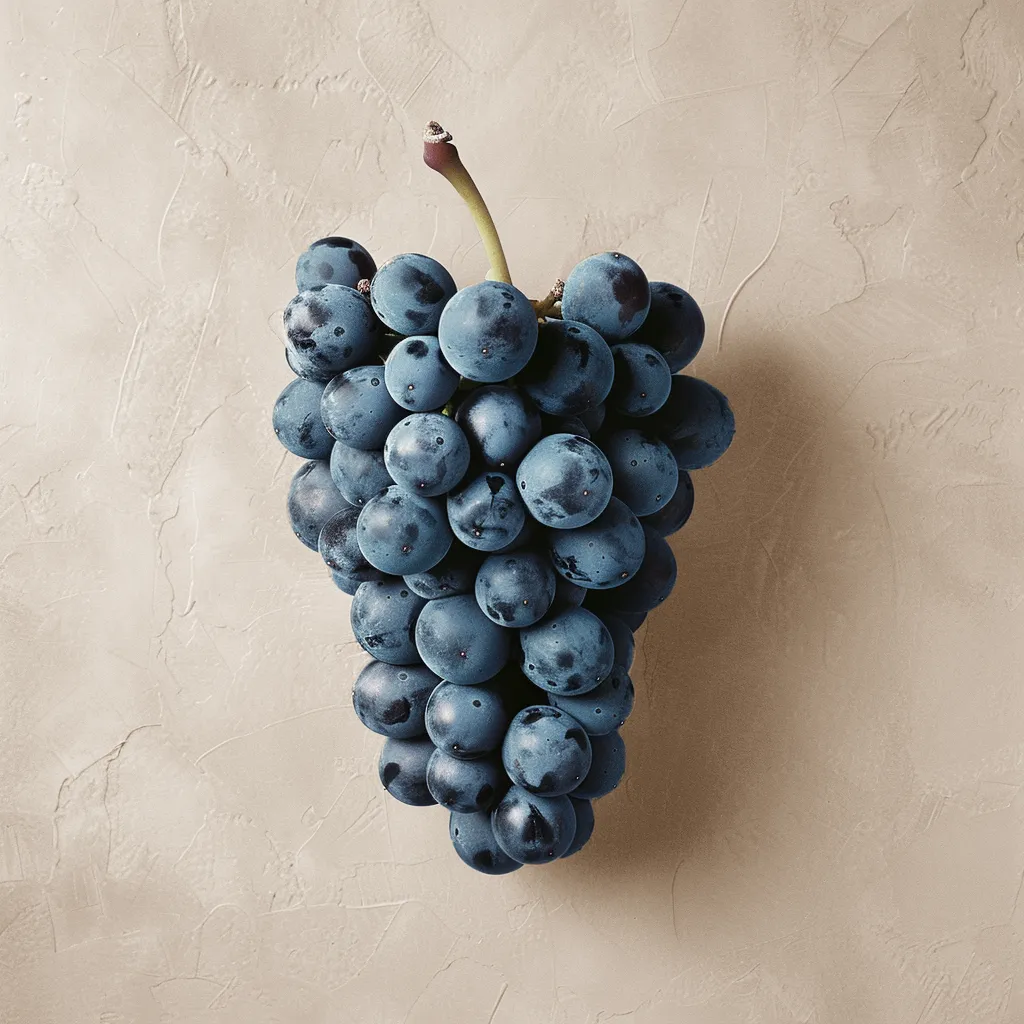
Affenthaler
Affenthaler is a historic red grape variety believed to originate from Germany. It is a natural cross between Gouais Blanc (Weißer Heunisch) and Süßschwarz. Once among the 15 officially permitted quality varieties in the German wine industry before World War II, it has since declined to near extinction. By 2005, only a handful of vines remained in two state collections. Affenthaler is classified in Hessen, while in other German regions, it requires experimental cultivation approval. The variety is known for its resilience to frost and its adaptability to various soil conditions, particularly limestone-rich terrains.
Affenthaler wines are deep red in color with bright acidity and firm tannins. The wines exhibit aromas of red and dark berries, often with earthy and slightly spicy undertones. On the palate, the wines are traditionally high in acidity, with an astringent edge when young. However, with aging, they develop a more balanced profile, gaining depth and structure while maintaining their characteristic freshness.
Historically cultivated in regions such as Württemberg, Baden, and along the Neckar, Murr, and Enz rivers, Affenthaler was once widely planted in mixed vineyards alongside Trollinger and Pinot varieties. It thrived in cold climates and was valued for its frost resistance. The grape was also found in Switzerland and Alsace under various synonyms. Though nearly extinct, some small plantings persist in old mixed vineyards, particularly in historical sites near Stuttgart, Esslingen, and Reutlingen.
The name ‘Affenthaler’ is thought to derive from the town of Apátfalva in present-day Hungary.
The variety was once a key component of the famous Affenthaler wine from Bühl in Baden but was later replaced by Pinot Noir due to shifting viticultural practices. Affenthaler is also known as 'Blauer Silvaner' in some regions, despite having no direct relation to the Sylvaner grape.